June 11, 2014

Have A Whale Of A Time In South Africa

Filed under: South Africa — Tags: , , , , — Paul Campbell @ 8:13 am

Not only is South Africa home to the traditional Big Five – it’s also home to the Marine Big Five. The foaming waves surrounding the stunning coastline are quite simply heaving with life, so if you’re dippy about dolphins, you’re in for a whale of a time. The two oceans that crash together off the shores of the Rainbow Nation are crammed with everything from Cape Fur Seals to Great White Sharks and Orca Whales. In fact, even the beaches in Cape Town are packed with African Penguins putting on an unconsciously comical act for the crowds!

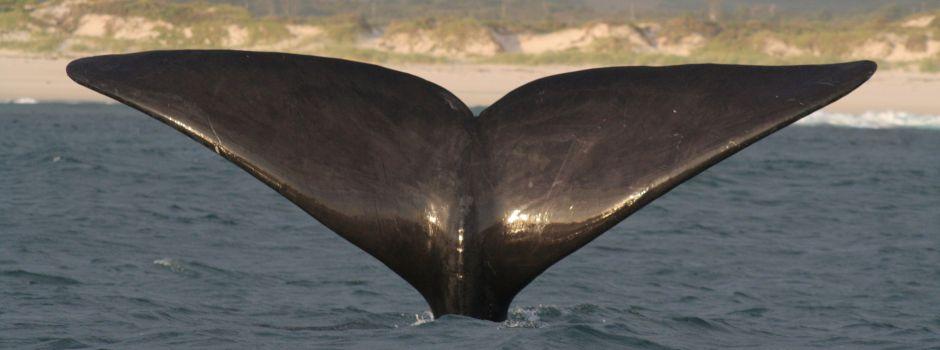
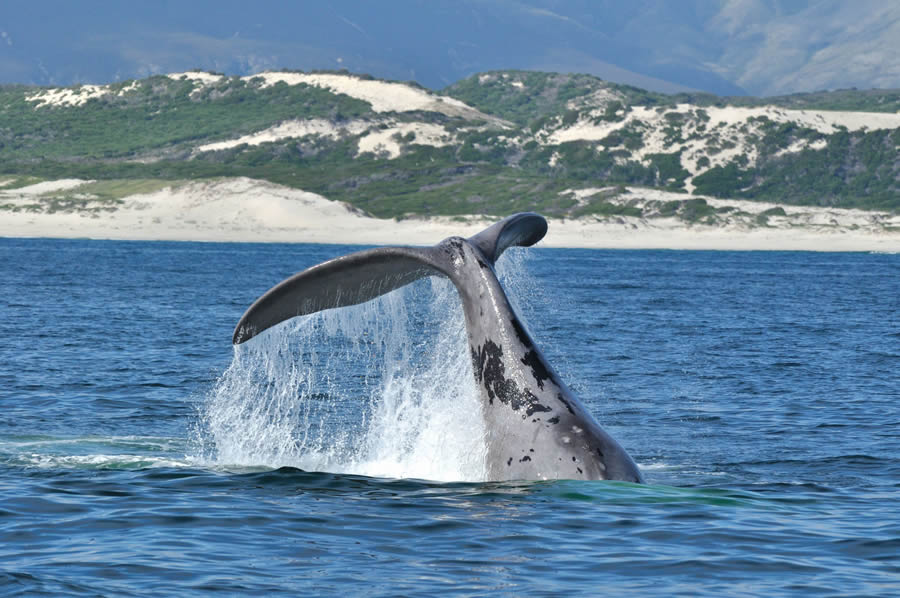
In particular, anyone fin-atical about whales will have a brilliant holiday in South Africa, as plentiful pods migrate to its waters every year. Watching a huge whale breach and spray in its natural habitat is a pretty humbling sight and seeing its tail disappear back into the blue will be something that you remember forever. South Africa is a great place to see these majestic mammals and you’ll have plenty of chances to get closer to whales than you would ever imagine.
234-south-africa-whale-watching

Several kinds of whale patrol the southernmost tip of Africa, so the Cape Peninsula is a superb viewing spot in an even more superb setting. Southern Right whales make their way here every year to nurse their calves while Bryde’s whales roam the coast all year round, a little further from the shore. Not only this, but huge pods of Humpbacks join their cousins on a yearly basis during their seasonal migration and Orca whales are occasionally seen. Overall, there are 37 kinds of whale and dolphin in the deep, so suffice to say that blubber is truly abundant in these parts!

There are certain seasons, activities and destinations that are particularly amazing for sighting some offshore action, so if you align your trip with our marine-spotting advice, you’ll be whale pleased. Here, we’ll tell you all about when, where and how to see these gentle giants flipping and floating during your trip.

WHERE?
While the Garden Route might be famous, the Whale Route is equally as fin-tastic and less whale known. The route follows the coast of South Africa from Cape Town all the way around past Durban, a whopping 1200 mile stretch of whale-watching territory. Along the way, there are a handful of hotspots that are a real must for marine admirers.

Hermanus, 120km from Cape Town is one of the whale-watching capitals of the world, so if you’re barmy about baleen whales, you definitely can’t miss it. The town is a pretty little outpost on a cliff overlooking the ocean with a couple of whale-spotting points that will blow-hole your mind. Whales frolic in the waves only 100 metres from the shore and you can view them while you grab a picturesque bite to eat at one of the seafood restaurants. Even better, the town has its very own ‘Whale Crier’ who walks the streets to make sure that you don’t miss a viewing opportunity!

Then, only 50km further along the coast, you’ll come across Gansbaai, another mecca for marine enthusiasts. Gansbaai means Goose Bay, and while the geese may not get your adrenaline going, the whale-watching is top notch. It’s a quaint cliff top town with killer views and whale-watching perches a-plenty, so it’s somewhere you should certainly stop by. Often dubbed ‘The Serengeti of the Sea’, it’s sure to get your seal of approval.

Further along the Garden Route, around the Knysna Heads and Plettenberg Bay, you’ll also get a wealth of whale-watching opportunities. In both of these places, you can find cliff top panoramas where different kinds of whales can be seen all year round. Not only this, but there are Cape Fur Seals, African penguins and dolphins dipping in and out of the waves all along the shoreline, so you’re guaranteed some magical marine moments in these destinations.

WHEN?
Bryde’s whales can be seen from South Africa’s coast all year round, but other whales have a far more migratory presence. From May, hoards of Humpback Whales make their way to these partsWand then, from June, the Southern Right whales begin arriving from Antarctica to calve and nurse their young in the waters of the Western Cape. Killer Whales visit more infrequently, but can still be sighted in the surf from time to time.

The peak season for whale sightings along the Whale Route is September and October, when you can reasonably expect a daily dose of action. From both cliff tops and tour boats, you’ll see an ocean teeming with life, with dolphins flipping, blowholes spouting and tail flukes flapping against the blue skies and choppy seas.

While there are many species of whale lining the shores during September and October, the most common sightings by far are Southern Right Whales. It’s a real privilege to get a peek at these creatures, measuring up to a whopping 15 metres and weighing up to 60 tons. There are only 3,000 to 4,000 Southern Right Whales left in the world today, so they really are something special to behold.
dreamstime_xl_27664732

HOW?
You can spot whales in South Africa by land or by sea, so if your sea legs are somewhat wobbly, you should still get an eyeful to really remember. The cliff tops of Hermanus, Gansbaai and the Robberg Nature Reserve near Plettenberg Bay are excellent places to pack a picnic, take a perch and wait for sensational sealife to surface before you. There are also plenty of coastal cafes and restaurants to sit back with a glass of crisp South African white wine and watch the waves offshore.

If you’re eager to get even closer, you can take boat trips out into the blue, where you can expect close-up encounters with the wildlife of the waves. Daily tours leave from Hermanus, Gansbaai and Plettenberg Bay, so you won’t be short of options along these shores. From Hermanus, the Southern Right Charter trips will set you on course for simply wonderful Southern Right sightings in Walker Bay. Along the way, you’ll probably bump into bottle nosed dolphins, seals and a multitude of marine birds.

Gansbaai is the jumping-on point for boats to Dyer Island, which has a 50,000 strong colony of Cape Fur Seals and a plethora of African and Jackass Penguins pootling about. It’s also an adrenaline junkie’s dream, with hair-raising shark cage diving trips setting sail for infamous Shark Alley each day.

Finally, Plettenberg Bay is awash with whale-watching tour options that operate all year round, so you’re bound to get an experience that you’ll be blubbering on about for weeks on end.


By now, you’re probably groaning under the weight of a thousand the whale puns, so you’ll be pleased to know that this is Le Fin. Take it from us, marine life in South Africa is just magnificent, so if you stick to these tips, you won’t be sorry.

May 17, 2014

Kenya – Mombasa Travel Update

Filed under: South Africa — Paul Campbell @ 10:09 am

This week, the British government changed its travel advice for Kenya and for the present time is recommending avoiding non-essential travel to Mombasa Island and an area between Mtwapa, north of Mombasa and Tiwi, south of Mombasa.

You can read the updated travel advise here, however we have been asked by a number of clients to clarify exactly what areas are affected, and if this will have any impact on their holiday plans.

FCO 285 - Kenya Travel Advice Edition 8 [WEB]Many people think “Mombasa” refers to all the beach resorts on Kenya’s coast but this is not actually the case. Mombasa is actually an island (as can be seen in the attached map – click to enlarge) and is the commercial centre, port and city. Whilst there are some hotels on the island, it is not a beach resort and the overwhelming majority of visitors to the are stay in the beach resorts of Bamburi, Nyali, Diani etc which are not actually in Mombasa but are on the mainland.

The British Foreign & Commonwealth Office (‘FCO’) advisory covers the area from Mtwapa to Tiwi (see map below) and this includes the beach resorts of Shanzu, Bamburi and Nyali to the North as well as Likoni and Tiwi to the south where a number of the leading beach resorts are located.

Diani and Galu on the south coast are not affected and visitors continue staying at all the hotels there as usual. The airfield of Ukunda near Diani, which we use for Pinewood Village and the beach resorts along Diani beach, is also not included in the non-essential travel advisory.

The only hotel in the affected area that we use is the Amani Tiwi Beach Resort, and we are arranging for guests currently booked to stay there to receive a complimentary upgrade to a hotel on Dani beach.

The main Mombasa Airport (Moi International) is not affected, and international airlines (including BA, KLM, and Air Kenya) continue to operate their scheduled flights as normal to Nairobi and Mombasa.

The present FCO advice against non-essential travel can be seen here and is summarised as follows:

Avoid all non-essential travel to the following:

The change to the British Travel Advisory on Kenya comes about following recent incidents of small home-made explosive devices being set off in Mombasa and Nairobi by the Al Shabaab terrorist organisation resulting in a number of deaths and injuries to Kenyans.

These attacks have taken place at remote towns near the border with Somalia or in the slums of Mombasa and Nairobi at public bus terminals, at bars or eating-places in low income housing areas, on public buses heading out of Nairobi coming from one of the big bus terminals, and with the latest yesterday in a crowded market place near the Eastleigh area of Nairobi.

These incidents have been tragic for those Kenyans who were killed or suffered injuries and for their families and friends but no foreign tourist visitors were affected and these incidents happened mainly in areas where tourists normally do not venture. They tend to be places where there is a less effective security presence unlike the airports or international hotels where enhanced security has been in place for some time. Such incidents have never affected any of the areas where we operate safaris in Kenya’s well-known wildlife parks and game reserves.

In accordance with the advice of the security agencies, including the British FCO, we totally avoid any areas subject to travel warnings or non-essential travel advisories.

We have already been in touch with clients who are directly affected by the current change in travel advice, however if you have booked a trip with us and are concerned about the arrangements then please to get in touch with your contact at Travel Butlers who will be happy to review things with you.

April 10, 2014

Celebrating Easter in South Africa

Filed under: South Africa — Tags: , , , , — Paul Campbell @ 11:13 am

Easter has hopped up on us once again, that time of year when the world hits a collective chocolate high and those same old egg puns become truly eggs-asperating. It’s a season of indulgence, family fun, sugar spikes and expanding waistlines, so let your diet disappear out the window for the long weekend and embrace the annual magic of the Easter bunny.

If you’ll be celebrating Easter in South Africa this year, you’ll be in for an eggs-tra special treat, as there are some really cracking events happening all over the country (I warned you about the egg puns). South Africa doesn’t do Easter by halves, so lick your lips, loosen your belt and prepare for some real Rainbow Nation eggs-travagance.

We’ve been on the hunt for some particularly eggs-cellent events over Easter in South Africa, from the stunning Cape Peninsula to the Little Karoo desert and to the very top of Table Mountain. After compiling our eggs-tensive research, we’ve whittled it down to our top six Easter picks across South Africa. It’s a very mixed basket, so whatever your age and the severity of your chocolate-addiction, we hope you’ll find something to make your Easter in South Africa really special.

1. Try The Epic Table Mountain Egg Hunt

dreamstimemaximum_18872689A trip to the top of Table Mountain is an incredible eggs-perience all on its own, but coupled with a huge Easter Egg Hunt at its summit it becomes something astronomical! Looking down over the curves and contours of the Cape, you can sit back and watch your kids frantically forage through the fynbos for Easter eggs. It’s Easter family fun at its most mind-scrambling, complete with bunnies and clue cards leading the way to childhood chocolate heaven.

The search starts on Sunday 20th April from 10h00 to 13h00 at the Top Station. A return trip costs just R100 for children and R205 for adults when tickets are bought online at www.tablemountain.net. If the Cableway is closed due to dodgy weather, the Easter Egg hunt will take place on Monday 21st April from 10h00 – 13h00. They’ve thought of everything to bring your Easter alive!

2. Indulge in Ostrich Egg Antics in Oudtshoorn

Oudtshoorn, tucked away in the Little Karoo Desert and separated from the Garden Route by a dramatic mountain range, is the ostrich capital of the world. If you’re looking for something a little egg-centric, Oudtshoorn offers some quirky – if not hopping mad – egg-themed fun that is perfect for the Easter weekend.

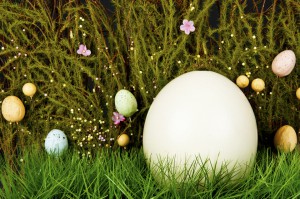
Here, you can eggs-pect to feed ostriches, kiss ostriches, ride ostriches and even watch an ostrich derby with local ostrich jockeys! Not only this, but you can eggs-perience the odd sensation of standing on a real ostrich egg. These gawky, long-legged creatures lay the largest eggs of any bird, and they weigh up to a whopping 1.4 kilograms each. That’s over 20 times the weight of a chicken egg and about the same weight as 41 Cadbury’s Creme Eggs! Don’t worry – their shells are as tough as old boots, so you won’t break them – but we’re sure you’ll have a smashing time nonetheless!

3. Join Africa’s Biggest Easter Hunt

You can take Easter to the eggs-treme this year at uShaka Marine World in Durban by taking part in Africa’s biggest Easter hunt – a real claim to festive fame! There are over 100,000 eggs to be found on both 19th and 20th April, promising unlimited fun for big kids and little kids alike. Set in the stunning aquarium complex along the surf-speckled shoreline of the Indian Ocean in Kza-Zulu Natal, it’s a surefire way to get an Easter to remember.

Tickets are R110.00 per person and the hunt starts at 07:00am on 19th and 20th April.

4. Enjoy The Perfect Middle Ground At Spier’s Egg-streme Easter Egg Hunt

Chocolate, wine, and a whole load of entertainment guaranteed to leave little ones happily eggs-hausted – the Spier’s Eggs-treme Easter Egg Hunt has been craftily devised to thrill the whole family. Set on the famous Spier Wine Estate in Stellenbosch, a picturesque and historical nook in the sweeping Cape Winelands, it’s the biggest Easter egg hunt in the Western Province, so it’s bound to eggs-ceed even the wildest Easter eggs-pectations.

At Spier, the Easter egg hunt follows a 3-km trail across the eggs-pansive grounds and beautiful vineyards of the estate, with elusive Easter treats hidden along the way. Afterwards, little ones can eggs-pend any leftover energy on a range of imaginative activities, including the eggs-traordinary chicken jumping castle and the cracking giant egg piñata. There are also plenty of opportunities for children to get their faces painted and eggs-plore their creative side with traditional egg-painting.

dreamstime_xl_22903673 (2)Parents – have no fear – you will not be eggs-cluded from the fun. While your children chase chocolate around the estate, you can try some wine and chocolate pairing (eggs-tra costs apply), and once the eggs-citement begins to die down, you can enjoy a delicious lunch on a sunny green against blue skies in a stunning South African setting.

Booking is essential and you can purchase tickets at Quicket.co.za. The tickets cost R100p/p for only the hunt, which starts at 10am. Tickets for the hunt and lunch (which starts at 1pm) cost R325p/p for adults and R162.50p/p for kids between the ages of 6 and 12 years.

5. Take Part In The Plett Easter Games

If you’re after something active for Easter and you’re within striking distance of the Garden Route, The Discovery Plett Easter Games is perfect for beach bunnies and adventure-loving athletes alike. There’s an eggs-tensive array of events including trail running, surf-ski paddling, mountain-biking, an open-water surf-swim, a township run, a golf challenge, a sandcastle competition and a Kids King of the Beach competition over a period of four days.

While it’s too late to register for an event, there are plenty of chances to relax on Central Beach with a picnic, lounge in the sunshine, soak up the lively atmosphere and watch the action unfold. It’s a great way to spend a family weekend on the beach and support local sport at the same time.

6. Cheer On The Runners (And Feel The Chocolate Guilt)

The Old Mutual Two Oceans Marathon in Cape Town (18-19 April) is said to be the most beautiful marathon in the world, and this year it takes place over the Easter weekend – on Saturday 19 April. You’ll be relieved to know that entries are closed, but the atmosphere is absolutely electric and spegg-tators are eagerly encouraged to support the runners. The good news is that you won’t have to shell out a penny!

The marathon follows Cape Town’s scenic routes and sees athletes from across the world pushing their bodies to the limit around the slopes of Table Mountain and the Cape Peninsula. Around 11,000 runners participate in the 56-km ultra marathon and 16,000 runners take part in the 21-km half marathon, so it’s something really inspiring to behold. If you want to eggs-perience a slice of the action firsthand, there’s a handful open fun runs and trail runs taking place the day prior (18 April) to the big events.


Well, by now I’m sure that you’re eggs-hausted by the persistent punning and chomping at the chocolate-bit to hatch your Easter plans, so I’ll head for the nearest eggs-it. Wherever you are in South Africa, and whatever Easter antics you get up to, we hope you have a simply wonderful time.

April 7, 2014

Family Safaris – Top Tips for Taking The Kids On Safari

Filed under: African Safari,Cape Town,Family Holidays,Kenya,South Africa — Tags: , , , , — Paul Campbell @ 3:27 pm

Safaris are not just for big kids – far from it! Little kids will go wild for the wildlife in Africa, so a family safari is a fantastic, fun-packed experience for all. Watching the eyes of your children widen with excitement as they encounter their first elephant and hearing them giggle as the vervets get up to some monkey business in the treetops is just wonderful. These are precious moments for any parent and your kids will be buzzing from their bush adventures for weeks on end.

So travelling with kids actually doubles the magic of Africa, as you’ll see it all once from your own perspective and twice through the shocked reactions of your little ones. You’ll be spellbound by their open-mouthed astonishment and amused by their total amazement. They might even be rendered speechless for a while – a rare occurrence no doubt!

Not only that, but there’s a whole lot for kids to learn on safari, from identifying animal tracks to understanding the habits of the wildlife in Africa. This makes it an excellent educational adventure for your cheeky monkeys and they’ll feel as though their storybooks have come alive before their very eyes! It’s heart-swelling stuff and we can’t recommend it highly enough.

If you do decide to jump in a jeep and head off a family safari in Africa, we have a few bite-sized chunks of advice that will help you have the holiday of a lifetime. We’ve been around the safari block more times than we can remember, so we ought to know a thing or two! This is what we’ve picked up from our years in the Big Five business about taking your youngsters out in the wild. We hope our tips set you on course for a truly show-stopping safari.

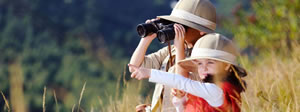
Kids safari at Kwandwe Kids on safari

1.OLDER IS WISER
It is understandably tempting to take your toddlers on safari, but from our reams of family feedback, we’ve found that children just slightly older get far more out of a safari than really little ones. If you can manage to wait until they hit the age of 6yrs or so, you’ll find your family experience a thousand times more rewarding. There’s no need to rush it while they’re tiny.

This is partly down to general lodge policy, which often states that only children over 6yrs can join adult game drives. For kids under this age, a four hour game drive is just too long and demands more stillness and silence than you can reasonably ask from really little ones. Safaris can also become boring for kids, as there are plenty of moments when you need to sit quietly and wait for some animal magic to happen. Sudden noise can compromise safety and scare the animals away, so it’s not such a great set up for toddlers.

2. START WITH SOUTH AFRICA OR KENYA
These two destinations are hugely popular with families, and for very good reason. If you’re a first-timer to family safaris, these are superb spots to try before heading anywhere more challenging.

There are a handful of brilliant Big Five game reserves across South Africa that are completely free from malaria. This is a massive draw for anyone travelling with their little clan in tow. By opting for one of these reserves, you don’t have to worry about malaria medication and you can take the odd mosquito bite in your stride. Being parents, you’ll already have 101 things to think about before heading to the airport, so at least this will take one thing off your plate.

Kenya and South Africa also have a wide range of reserves and lodges that welcome children with open arms, and this makes all the difference when you’re taking your kids on safari. The more family-friendly the lodge, the more they’ll keep your kids entertained and occupied with all kinds of bush activities. This means that you’ll get more time to yourselves as parents and, after all, it’s your holiday too! Doing some research about family lodges beforehand and choosing one that really loves children will completely pay off in the end.

3. GET WITH THE KIDS PROGRAMME
Across South Africa and Kenya, there’s a smattering of safari lodges with excellent programmes for kids. While you take a well deserved break at the pool between game drives, your children can set off some ‘bush bumbles’ that will get their eyes popping and set their minds spinning. Afterwards, your kids will be a-buzz with tales from their mini bush adventures and your batteries will be blissfully recharged. What could be better?

Kids programmes provide a huge assortment of activities that are both educational and entertaining for children – every parent’s dream. They involve nature walks to spot insects around the lodge, junior tracking courses with unmissable chances to pick up zebra poo (!) and themed bush picnics. Often, there are cooking lessons for budding chefs to whip up cookies, as well as traditional storytelling about ‘Why The Elephant Has A Trunk’ or ‘Why The Warthog Is So Ugly’.

We recommending choosing a lodge with a really active and engaging kids programme, as you’ll find that the whole family benefits in the end. Your children will be happy, you’ll be relaxed and you’ll all be eager to run straight back to the bush on your next holiday.

4. KNOW WHEN ENOUGH IS ENOUGH
Small children are not naturally made for the rhythm of safari life, which is packed with very early mornings and late afternoon game drives. While it’s wonderful for a few days, it definitely disrupts family routine, so it’s important to recognise when enough is enough.

Your kids will love the excitement of their safari experience, but the dawn wake up calls will take their toll after a couple of days. We normally recommend safaris of one to three days for families with children under the age of ten. This is just enough time to feel the magic of a Big Five safari without your rug rats getting ratty and overtired. It’s the perfect middle ground.

5. GO FOR CAPE TOWN AND THE GARDEN ROUTE
A trip along Garden Route ending with a Big Five safari is a killer combination for little kids. The Garden Route is natural playground for children, so it’s a perfect place for a family adventure. As you drive along the stunningly scenic coastline, your little ones can monkey around in Monkeyland, enjoy interactive elephant experiences, wander amongst tropical birds, cuddle baby cheetahs, stay on a working ostrich farms and spot dolphins in the surf. The list just goes on and on!

The Garden Route really is the stuff of family holiday fantasies, and topping the trip off with a Big Five safari in one of the malaria-free reserves of the Eastern Cape will be the icing on the cake. So, if you’re in doubt about where to take your youngsters this year, go for the Garden Route. It’s a real treat for big kids and little kids alike.

So that’s it – our top five tips for a first-class family safari. It goes without saying that if you need a hand choosing a lodge or a chat about any parental concerns, we’ll be right on the end of the phone. Feel free to give us a call on 0044 1932 428380 and we’ll help in any we can.

March 28, 2014

How To Get The Most Out Of Your Kruger Safari

Filed under: South Africa — Tags: , , , , , — Paul Campbell @ 2:03 pm

The Greater Kruger National Park is the Big Daddy of South Africa safaris, the Godfather of game reserves. Stretching into the horizon across a whopping 2 million hectares of wild African bush, it leaves other game reserves in the dust. Nowhere else can compare. In Kruger, thousands of animals roam the riverine forests, wander across the sun-baked savanna plains and gather around natural waterholes in the twilight. It really is the Africa of your imagination – guaranteed to get your heart thumping, your toes tingling and your camera clicking like crazy.

For many people, a Kruger safari is a once-in-a-lifetime experience – something truly special and totally unrepeatable. All year round, wide-eyed wildlife enthusiasts flock to Kruger in search of the famous Big Five, eager to feel the spirit of safari. Every single sunrise and sunset, open-topped Land Rovers filled with excitable tourists leave the lodges and set off into the heart of the bush on the lookout for lazing leopard, prowling lion and wandering herds of elephant in the dusky light. Such popularity is entirely deserved, so there’s rarely a ‘slow day’ in the Kruger safari calendar.

Kruger really is breathtaking at all times of year, so whether you visit at Christmas, Easter or the height of the English summer holidays, you won’t come away disappointed. However, as an expert insider tip, we can reveal that the most ‘seasoned’ of safari-goers head for Kruger from May to September – the South African winter. The reasons for this range from cost to climate, making perfect sense for both your pocket and your personal comfort.

Here’s a rundown of the rationale behind this safari school of thought. We hope that it will help you take the first steps towards your very own Kruger adventure:

1. WINTER IS ALL ABOUT THE WILDLIFE

If youre an avid animal lover and an eye-popping safari is your holiday priority, May to September is best time to visit Kruger – hands down. Over this period, your Big Five safari will be chock-full of unforgettable wildlife moments to cherish forever after.

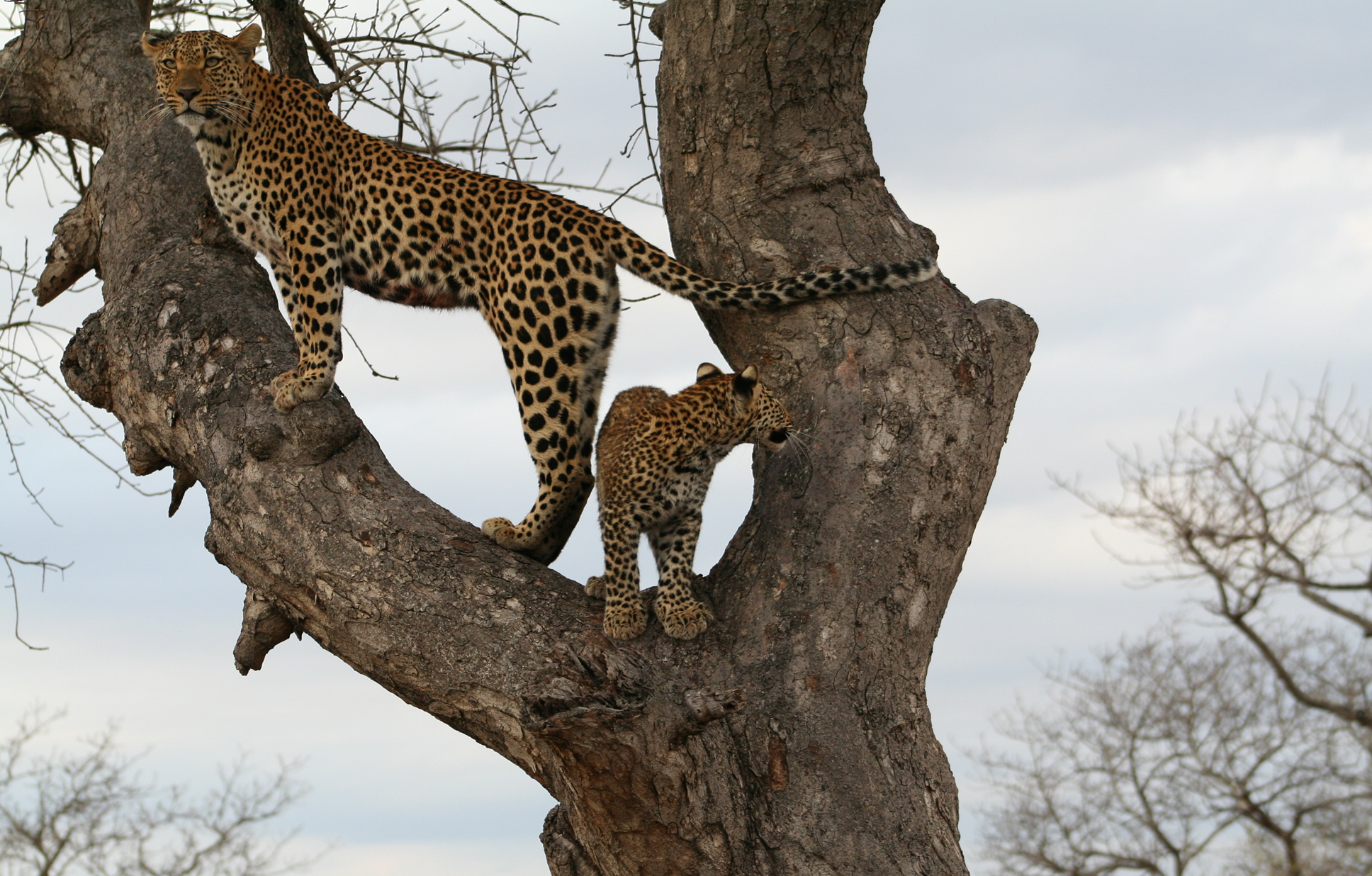
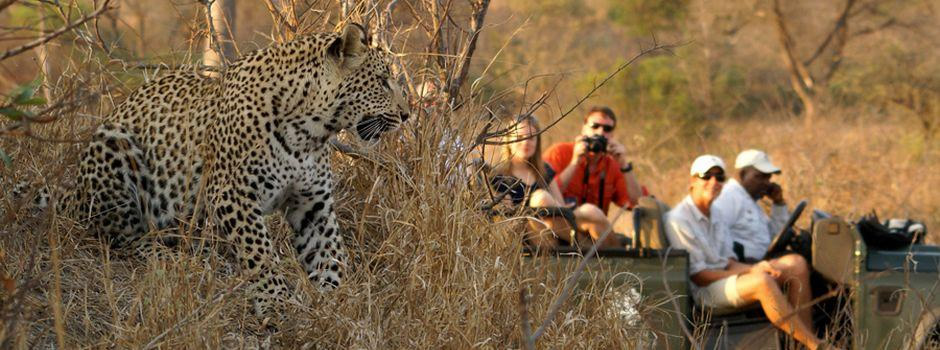
LeopardBy May, the seasonal rains have passed through the Kruger region and the sun begins to bake the bushveld. During this dry season, which lasts until September, Kruger is a regular wildlife-spotting wonderland. With the African sun beating down every day, the bush quickly thins out, making it far easier to spot leopard in the  trees, elephant through the thicket and lion cubs in the grass.

These leopards were photographed in late winter the Sabi Sands Game Reserve area of Greater Kruger, and you can see how the lack of leaves on the tree makes then so much easier to spot.

Without rainfall, the animals are also more dependent on the water sources. Their thirst draws them out of the bush and into to the open. So, from May, the waterholes sprinkled across the reserve become a hub of animal activity at all hours of the day, with zebras, giraffes and elephants all sipping alongside one another. Here, at the waterholes, you can be waiting in your open-topped jeep, full of anticipation with your fully charged camera in hand. We know from personal experience that you won’t come away with an empty SD card!

2. YOUR SAFARI WILL COST MUCH LESS!

Your money will go significantly further if you book a Kruger safari for between May and September, giving you a little extra wiggle room to be a little extra indulgent. After all, if this is a once-in-a-lifetime safari, you may as well do it in style!

As May to September is technically classed as ‘low season’ for international tourism in South Africa, lodge prices quite literally head south for the winter. Every year, there are some amazing deals to be snapped up, with rates at some private game reserves dropping dramatcally and many lodges run ‘Stay 4 Nights – Pay For 3’ special offers.

These discounts are incredible considering that game viewing is actually at its very best over these months. So, from May to September, you’ll get the maximum wildlife experience for the minimum strain on your wallet. What could be better?

3. IT’S JUST COOLER

Winters in Kruger are bright, crisp and dry. Skies are blue, the air is cool and sleeping at night is both cosy and comfortable. In general, the temperature hovers between 9C and 26C, which is perfectly pleasant and a little nippy as night falls. There’s very little humidity in the air and temperatures are more temperate, so this makes for a far less sweaty safari experience!

As rainfall is very low over the winter months, there are also fewer pesky mosquitoes to contend with which really is an added bonus. Not only does it lower the risk of malaria, but it will save on midnight scratching!

Although the early morning game drives can be very chilly, you’ll be snug in your safari jeep with woollies on, a blanket over your knees and a hot coffee between your hands. It’s an epic way to wake up, and your circulation will quickly pick up when you spy a pride of lion in the bush!

4. YOU’LL BE ONE STEP AHEAD OF THE HERD

Although it’s true that Kruger is busy all year round, most international visitors head for South Africa from December to April – the summer of the Southern Hemisphere. During these months, Cape Town is warm and sunny, so it’s perfect for a cosmopolitan beach break and a meander along the Garden Route. Many people choose to top off their trip with a Kruger safari, which explains the holiday hoards at this time of year.

However, Kruger has a totally different climate from Cape Town, so while the summer is sensational in the Cape, the winter is wonderful for wildlife in Kruger. Travelling to Kruger between May and September, you’ll be breaking away from the pack, so you’ll find fewer crowds and fewer Land Rovers at each sighting. This will give your safari a far more exclusive atmosphere.

It’s important to remember that Kruger is equally popular with South Africans who return year on year to its lodges, hills and valleys. By avoiding the main holiday periods and school breaks over Christmas and throughout July, you’ll beat the pack, getting a world-class wildlife experience without the safari swarms.


All in all, May to September really is the season for safari-savvy travellers to Kruger. It’s more exclusive, less expensive and even more exhilarating. The only drawback of travelling to South Africa at this time of year is the weather in Cape Town, which can be a bit grizzly in these months. However, the tropical coastal city of Durban, the stunning Drakensberg Mountains and the historically rich state of KwaZulu Natal will all be crisp and bright, so if you blend Kruger with these sunny spots, you’ll be all set for a brilliant holiday.

Need more convincing? We thought not. Well, it just so happens that now is the perfect time to book your ‘low season’ Kruger safari in 2014! There are some great offers in the offing and the lodges are filling up fast, so it’s best to get a wriggle on with your booking. Just buy your ticket, choose your lodge, hop on a plane, jump in a jeep and keep your camera firmly by your side at all times! Trust us, you won’t regret it.

February 17, 2014

Photo Competition Winners: Lions, Lions Everywhere!

Filed under: Travel Butlers — Tags: , — Paul Campbell @ 3:44 pm

Many thanks to everyone who entered our most recent Photo Competition. It is always lovely to see some of the fantastic pictures that our clients take on the holidays they book with us, and it is also always very difficult to pick the winning photos.

We have just  just announced the winners of  the competition that closed on 31st January 2014,  and lion photos have swept the board this year!  All three of the winning photos in the competition were of lions, however they are all very different from one another.

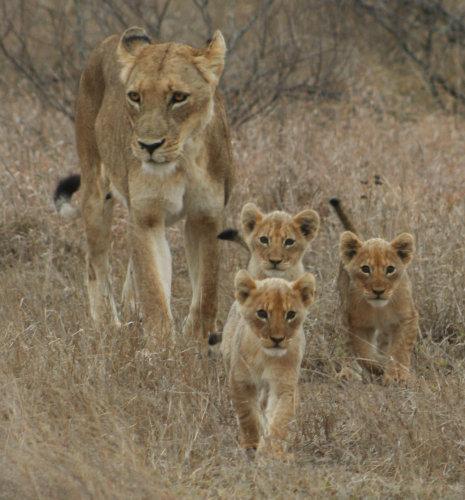
Peter Duncan submitted a number of lovely photos, however our favourite was this great picture of a lioness with three young cubs which was taken whilst he was on his honeymoon with new wife Katy at nThambo Tree Camp in the Klaserie Games Reserve, South Africa.

1712_GuestPhoto

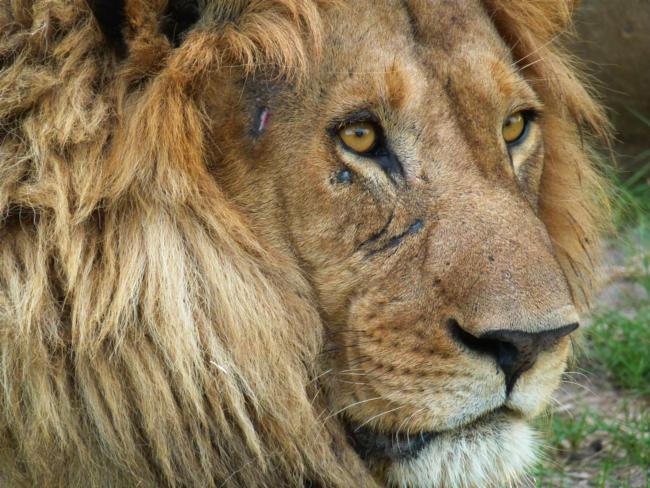
Our next winner is Vivian Auer’s portrait of a battle-scared male lion taken at Pom Pom Camp in Botswana’s Okavango Delta.  This lion has so much character, and it is very clear just how tough a life can be for a big male lion.

Close Up of Lion

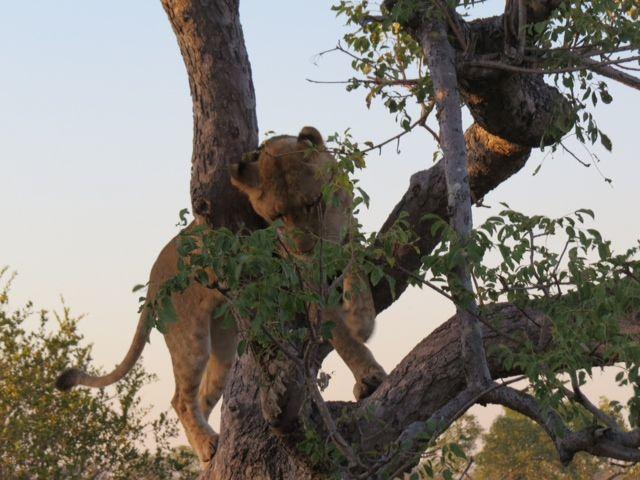
The final prize goes to the picture that was most liked and shared on Facebook and Google Plus, and that was Steve Reay’s unusual picture of a lion up a tree that was taken at Nkorho Game Lodge in the Sabi Sands Game reserve (South Africa).  It seems to be bad news for the many leopards of the Sabi Sands if the lions have started climbing trees!

Up a Tree

Thank you again to everyone who submitted photos to the competition, and our congratulations go to Peter, Vivian, and Steve:  a prize of a £50 Amazon Voucher is on it’s way to each of you.

February 6, 2014

Travel Butlers Reports Boom in South Africa Holiday Sales

Filed under: Cape Town,South Africa,Travel Butlers,Travel News — Tags: , , — Paul Campbell @ 1:03 pm

The current strength of the pound against the South African Rand has helped drive record sales of holidays to South Africa in January 2014, with many people also taking advantage of the exchange rates and special offers to book more expensive hotels than they night otherwise treat themselves to.

It is probably easier to see the impact of these changes if we look at the cost of staying at one of South Africa’s best known 5* safari lodges.  A three night stay at Bayethe Lodge in the Shamwari Game Reserve in July 2012 would have cost £2100 for 2 people if booked in January of that year.  The equivalent three night stay in July 2014 will only cost £1160 at current exchange rates – a saving of around 45% or nearly £1000.

With Cape Town enjoying a heatwave (and no rain forecast in the next 7 days!), it’s not hard to see why we believe that South Africa is now better value for money than ever before!

December 31, 2013

Travel Butlers’ Top 5 Travel Destinations For 2014

Filed under: Kenya,South Africa,Tanzania,Travel Butlers,Travel News,Victoria Falls,Zambia — Tags: , , , , , , , — Paul Campbell @ 12:55 pm

Every nook and cranny of Africa is packed with magic, from coast to coast and corner to corner. It’s totally timeless and full of eye-opening, heart-warming surprises at every turn. On safari in Africa, you’ll be a tiny presence in a land that’s larger than life, dwarfed by vast plains, mist-shrouded mountains, thundering falls and huge herds crossing the savanna. It’s bound to give you a whole new perspective and keep you coming back for more.

If you’ve never been to Africa before, now is the perfect time to sneak it onto your list of New Year’s Resolutions as a late addition. Waking up to the sounds of the bush, watching elephant roam at dusk and seeing playful lion cubs rough’n’tumble on the savanna will be something that stays with you forever. We know from experience that it will be life-changing and we guarantee that by the end of the year, you’ll be as hooked as we are! So here’s to 2014, the year of African adventures!

Choosing where to go in Africa is an altogether more tricky affair. The possibilities are almost as endless as the views over the Great Rift Valley. But fear not – help is at hand! We’ve been prowling high and low to find the best tips for visiting Africa in 2014. Here’s our Travel Butlers Top Five guide, from morning game drives to mountain gorillas and majestic falls.

1. Kruger National Park

Kruger

If you’re an animal lover or nature nut, Kruger is the place for you, with some of the best game viewing on the entire continent. Take sundowner safaris through the bush, sleep under a canopy of stars in a tented camp and get totally lost in a world of wild romance. If a Kruger safari has been forever on your wishlist but out of your financial reach, 2014 is the perfect time to go. As an added bonus, the South African currency is currently weak, making Kruger an amazing experience at amazing value for money!

2. The Great Migration in Kenya or Tanzania

GreatMigration

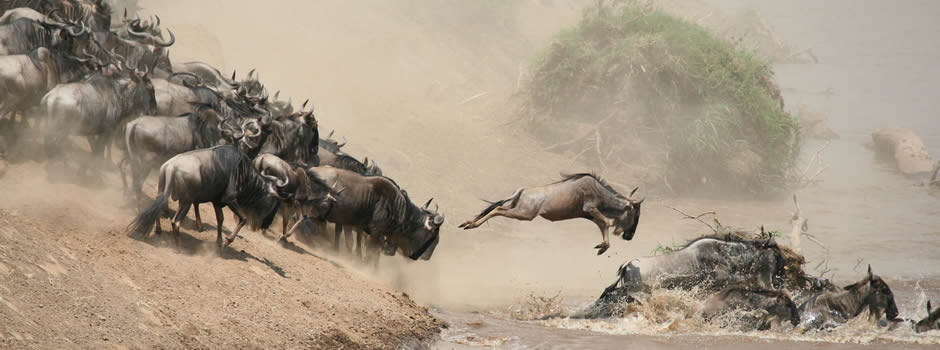
The Great Migration is something that has to be seen to be believed. It’s just impossible to imagine the immense sight or the deafening sound of 1.5 million wildebeest, 200,000 zebras and 350,000 gazelles charging across the plains. Every single year, millions of hooves create an epic rumble and kick up a vast swirl of dust on the savanna as the greatest herd on earth travels to greener pastures. There just aren’t words to describe the feeling of seeing this firsthand. It’s incredible, humbling, hair-on-end stuff and we can’t recommend it highly enough for 2014 – or indeed for any other year!

3. Cape Town

CapeTown

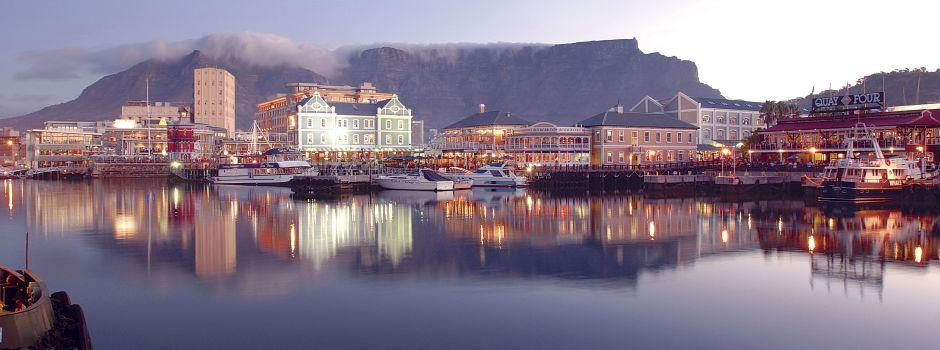
Cities just don’t come better than Cape Town. With a coastline to die for, a remarkable cultural history and the magnificent backdrop of Table Mountain, it combines stunning natural beauty with a truly cosmopolitan buzz. The Lonely Planet has rated Cape Town of one of its Top Ten Cities for 2014, and we couldn’t agree more. Not only this, but 2014 marks the 20th Anniversary of the end of Apartheid, so go this year to honour the great Nelson Mandela and join a national celebration of hard-fought freedom and tolerance.

4. Mountain Gorillas and Chimps in East Africa

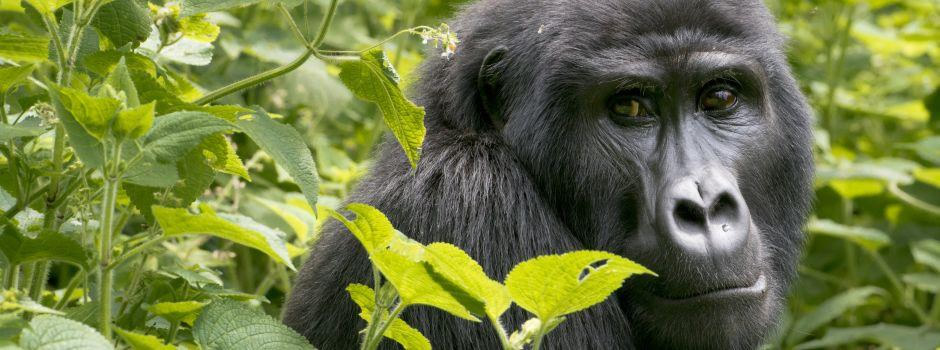
GorillasAndChimps

Trekking through tropical forest to see mountain gorillas in their natural habitat is a truly privileged, awe-inspiring affair. It’s something that few travellers are lucky enough to experience and, with only around 650 gorillas currently left in existence, it’s becoming rarer and rarer by the day. Visiting these extremely endangered silverbacks in north west Rwanda and Uganda is a great way to support their future, and right now they need your support more than ever. What better reason could there possibly be to travel?

5. Victoria Falls

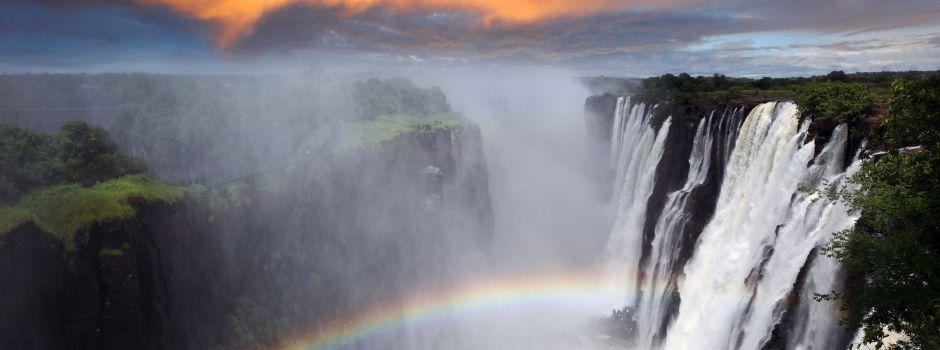
VictoriaFalls

Thundering, roaring, cascading, bubbling, spraying – Victoria Falls has a life all of its own.  This is Mother Nature at her mightiest and 2014 is a great time to see her in all of her glory. Troubles in Zimbabwe have been steadily smoothing over and the introduction of the US dollar has made visiting the Zimbabwean side of the falls more economical, which has prompted The Lonely Planet to feature Victoria Falls on its Top Ten Regions for 2014. Moreover, Zimbabwe is planning to create what it calls a ‘Disneyland for Africa‘ next to the falls, so we implore you to get there now before it turns into a glitzy tourist playground!

So, there you have it – our top Africa tips for 2014. We hope this inspires you to set off on your very own African adventure for 2014 and we’re always here if you need a hand with the planning.

As Hemingway famously said, “I never knew of a morning in Africa when I woke up that I was not happy”. Wherever you choose in Africa, you can’t go far wrong. In other words – hakuna matata! Happy 2014 to one and all!

December 4, 2013

The African Twelve Days Of Christmas

Filed under: African Safari,Botswana,Infographics,Kenya,Namibia,South Africa — Tags: , , , , , — Paul Campbell @ 5:30 pm

On the first day of Christmas, Afroca showed to me...

On the twelfth day of Christmas, Africa showed to me…
12 Springbok grazing
11 Lions a-lazing
10 Zebra crossing
9 Cheetah chasing
8 Monkeys marching
7 Hippo hiding
6 Rhino roaming
5 EL-E-PHANTS!
4 Soaring birds
3 Wild Dog
2 Tall giraffes
And a leopard in a thorn tree!

November 29, 2013

Tented Safari Camps: It’s Camping, But Not As You Know it…

Filed under: African Safari — Tags: , , , , , — Paul Campbell @ 10:41 am

A safari holiday is a trip of a lifetime, so it’s worth planning it down to the finest detail and getting it just right. When we discuss tented safari lodges with our clients, we often find that the suggestion of a tented camp is met with a marked skeptical silence on the phone. And no wonder. In the UK, camping conjures up visions of muddy fields with distant toilet blocks and a menu of charred, assorted, yet still somehow undercooked, sausages. Hardly a portrait of the holiday highlife.

In fact, we can personally sympathise with the tented lodge trepidation that our customers express. Some 11 years ago, when we booked our own very first safari holiday, we opted for a tented camp, only to experience these ambiguous feelings ourselves. Safe to say, we were both a little nervous about the ‘camping‘ concept during the build up to the trip. However, on arrival, we saw that our concerns were totally unfounded – especially when we were luxuriating in our private plunge pool with a glass of bubbly!

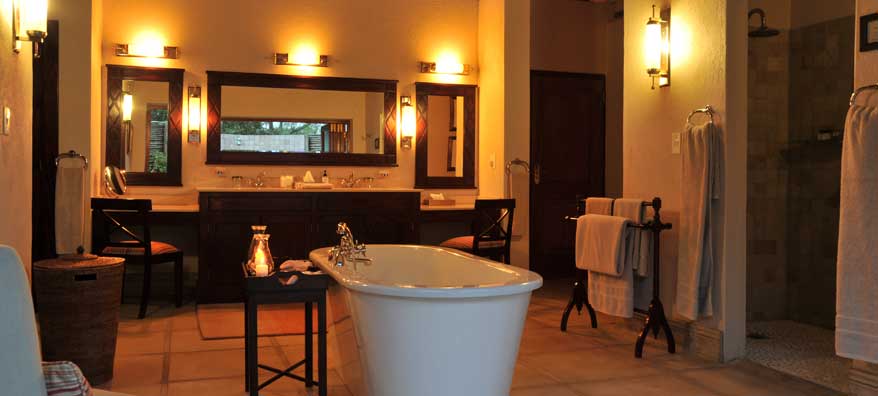
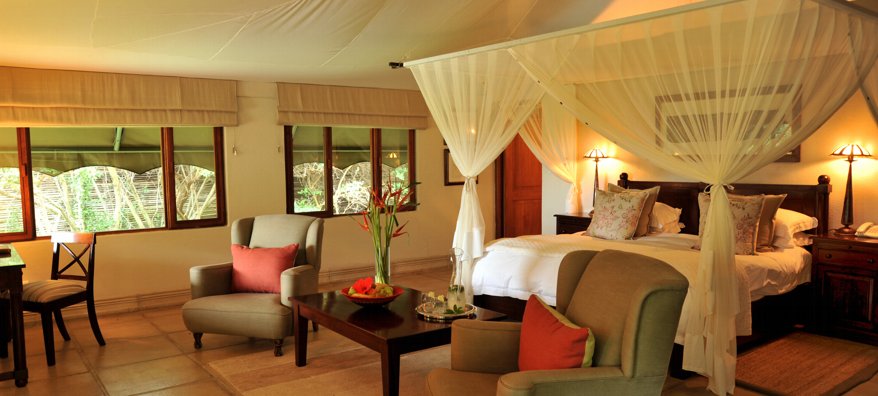
We stayed at Savanna Private Game Reserve in the Sabi Sands,  where the air-conditioned tents are kitted out with every creature comfort imaginable. Each tented suite comes complete with a fully-stocked mini bar, a spacious en-suite bathroom with outdoor and indoor showers, and a private veranda. Not only this, but we were treated to spectacular views over a floodlit waterhole from the main lodge, which is set in lush gardens with lovely views. Every need we had was catered to by the friendly bar and waiting staff. We simply couldn’t believe our luck.

Savanna-bath2Savanna-bed-2
SavannaSavanna-lion
Savanna is no exception to the rule. In reality, an African tented safari camp is worlds away from a flimsy canvas dome in a soggy field. It’s camping, yes, but know as you know it. The tents are draped in luxury, from four poster beds to outdoor showers and private verandas under starlit skies. The main lodges are little pockets of true decadence, with outdoor swimming pools, killer views, roaring open fires and outdoor blazing ‘boma‘ bonfires. World-class food is lovingly prepared for every meal, without a charcoal sausage in sight!

Staying in a tented lodge is a route straight into the romance of Africa. Tucked away in the heart of the bush, surrounded by acacia trees, chattering birds and the sounds of the wildlife in the distance, it’s a totally immersive safari experience. It’s not uncommon to see giraffes wandering past the camp from the patio and elephants drinking from the waterholes around the camps, so it’s about as close to nature as you can possibly get. The night skies are completely unpolluted and filled with bright stars, making everyday life feel a thousand miles away. There really is nothing quite like it.

So, having calmed those ‘camping’ nerves, we’ve put together a handful of top notch tented lodges that we love at Travel Butlers. Here’s our lodge lowdown:

Wildside Safari Camp, Entabeni Private Game Reserve, South Africa

Wildsidesmall
This lovely tented lodge is brilliant for Big Five safaris and amazingly good value for money. Situated in the 22,000 Entabeni Safari Conservancy, a convenient 3 hour drive from Johannesburg, the camp is nestled against the cliffs of the Waterberg Mountains. Its tented chalets are decorated in traditional safari style and the lodge offers a huge assortment of exciting activities, from scenic helicopter flights to sunset cruises. The reserve is malaria-free, making it a great option for families, and there are 4 dedicated family chalets available.

Ongava Tented Camp, Etosha National Park, Namibia

Ongava
This tented camp calls itself ‘one of Namibia’s best kept secrets’ and for good reason. Located in the endless plains of the 30,000 hectare Ongava Game Reserve, at the southern tip of Etosha, the exclusive camp overlooks a popular waterhole and features just 8 traditional Meru-style chalet made from stone, canvas and thatch, with romantic al fresco showers and panoramic verandas. It’s a complete safari hideaway in one of Africa’s most remarkable wildlife destinations, and we can’t stop singing its praises.

Ngala Tented Camp, Timbavati Game Reserve, South Africa

NgalaSmall
This intimate safari getaway is totally spellbinding. Situated on a riverbed in a wild and remote corner of Timbavati Game Reserve, which shares unfenced borders with Kruger, Ngala Tented Camp will bring you as close to nature as you can possibly get. Animals wander freely through the camp grounds and sleeping under canvas in a luxury tent, you’ll be treated to a nightly bush chorus. The rim-flow swimming pool on the riverbank, surrounded by wildlife, is something really special. Think moonlit riverbed meals, stargazing, and romantic bush sundowners. Bliss!

Cottars 1920s Safari Camp, Masai Mara, Kenya

Cottars
This tented lodge takes you back in time to a whimsical age of intrepid explorers and wildlife pioneers. Set deep in the south-east corner of the Masai Mara, bordering the Serengeti and Loliondo reserves in an untouched 250,000 acre concession, Cottars is an exclusive camp with a huge personality. Staying in authentic white canvas tents full of stylish safari antiques, you’ll feel as though you’ve stepped back into the elegant golden era of the 1920s. Gazing across the plains from your private veranda, you can get wonderfully lost in the spirit of safari. The dedicated team of genteel butlers will cater to your every need and there’s even a masseuse on hand for complimentary massages and manicures. Not your average camping experience!

Bayethe Lodge, Shamwari Game Reserve, South Africa

bayethe
Last but not least, Bayethe Lodge, located amongst the hills and valleys of the 25,000 hectare Shamwari Game Reserve is a true example of tented camp luxury. Popular with honeymooners for its intimate atmosphere, the tented suites at Bayethe are hidden away between the trees to guarantee true privacy. Every suite has its own private plunge pool and viewing decks perfect for a starry tipple before bed. The 3 Superior Suites even feature romantic roaring open fires, offering total decadence and seclusion. Shamwari is also malaria-free, making it a completely worry-free retreat from rest of the world.

This small selection is merely the tip of the tented camp iceberg. There are many more brilliant options available across Southern and East Africa. We’ll happily talk you through the features and amenities of each lodge to put your camping concerns to rest once and for all.

« Older PostsNewer Posts »