August 22, 2013

Vote For Travel Butlers in the SATOA Travel Awards

Filed under: Travel Butlers,Travel News — Tags: — Paul Campbell @ 4:40 pm

We are delighted to announce that we have been nominated for this years SATOA Travel Awards in the Tour Operator category.

SATOA2013-Nominee-ColourSATOA are the industry body that promotes travel to Africa and the Indian Ocean, and they are running this award in recognition of companies who provide outstanding products and services to their clients.
We were immensly proud when we won this award last year, and many thanks to the peeople that have nominated us again this year.Fingers crossed, and we look forward to seeing the great and the good of the African Travel industry at the Awards Ceremony in central London on the 19th of September.


August 21, 2013

Did you know? B is for Bushbaby

Filed under: African Safari,South Africa — Tags: , , , , — Tracey Campbell @ 10:00 am

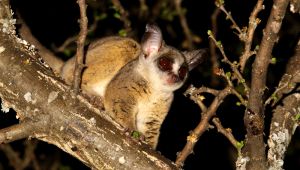
One of the cutest and smallest creatures of the African bush, the bushbaby is native to more than 25 African countries. Their name comes from their distinctive call, which sounds just like a baby crying.

They are nocturnal animals, but often the sharp eagle-eyes of the tracker or ranger can spot a bushbaby lurking in the branches of a tree, and guests are treated to a unique viewing with the aid of the night game-drive spotlight.  This has also led to their South African name of ‘nagapie’, which means ‘little night monkey’ in Afrikaans.  For anyone learning Afrikaans, you pronounce this nark-ahh-pees (not nag-a-pie, which is the mistake I have just made in front of my South African work colleague).

The most commonly seen bushbabies are the Thick-tailed Bushbaby and the Lesser Bushbaby – with not surprisingly, the Lesser Bushbaby being the smaller of the 2 species.  The Lesser Bushbaby has a body length of just 15 cm, but its tail is 20 cm.

They are very particular about their appearance, and will groom themselves fastidiously before embarking on a night of foraging for insects, lizards, small birds and fruit.

The eyes of a bushbaby are incredibly large which give them their excellent night vision, but they cannot their eyes swivel in the sockets, so they are forever moving their heads when searching for prey, giving them a further comical appearance.

Their large ears give them very acute hearing, and their strong hind legs enable them to jump high – the highest recorded jump was 2.25 metres.

Despite their good eyesight and hearing and jumping skills, they do still have to be careful when out, as they are favourites on the evening dinner menu of owls, snakes, servals, African wild cats and genets.

Bushbaby

August 19, 2013

Kenya’s Beach Traders – Good or Bad?

Filed under: Honeymoons,Kenya — Tags: , , , , , , , — Tracey Campbell @ 10:15 am

There is a current rumour that Kenya are once again looking at banning beach traders from their beaches.

True, sometimes these people can be annoying, and in some cases, a bit intimidating. You are out for a quiet (and possibly romantic) beach walk, and you do not want to be hassled by someone trying to sell you a pair of fake RayBan sunglasses, or a hand-carved giraffe, or a camel ride. They are certainly persistent – I have been followed for about 15 minutes in the past, and no amount of saying no seemed to get through to them.

I initially used to try speaking in a different language to them.  The first time I encountered a beach trader, I was young and very naive – only 21 so a wee baby really – and on my very first long-haul holiday to Mombasa. The young guy hawking his wares obviously realised I was not African (’twas not difficult, I was pasty white and blonde then), so they approached me and my partner and asked in English if I would like to buy whatever – I think it was a necklace. I replied in French (I had vaguely studied French as part of my college course) to say I did not speak English. He immediately replied in perfect French.  Which threw me.  As I had no idea what he said.  So I tried saying in Spanish that I did not understand him. Dammit if he then didn’t reply back in Spanish. I think if I had tried Japanese he would still have had an answer. Which, to be honest, you have to admire. These guys may not have a University degree nor do they have a well-paid full time job, but they can speak more languages than the majority of tourists to Kenya.

Back to the subject in question, however, as I have digressed slightly.  The reason for the new move to ban the beach traders is that the Kenya tourism ministers ‘want to ensure that tourists enjoy their time outside hotels instead of worrying about beach boys and girls who hassle them or steal from them’.

Now, I must admit, I have never worried that these people would snatch my camera or purse and run off, but I do resent the ‘in your face’ intrusion. And I am aware that I do have a quick temper, so when pushed with something like this, I do have to really control myself and not shout at them to go away.

I find now the best approach is to act completely deaf. If you totally avoid all eye contact, and do not respond at all (and yes, we are all brought up not to ignore people as it is rude, but this does seem to be the only approach that works), they will soon get bored with trying to engage you in a conversation, and wander off to find another tourist who may not be as resolutely stubborn as me.  Even if you say ‘no thank you’ you have engaged them in a conversation – so you are ‘fair game’ for them to try to elicit more words out of you.

Personally, I think that beach traders do have a place still on the Kenyan beaches.  As long as they learn to respect that if they are ignored, to just go away. Sometimes, they may be selling something that people would want as a souvenir, and having bought from someone local and bartered on the price is more of a souvenir and holiday experience than buying it from the hotel curio shop would be!  It is their livelihood too, so by banning them they will either only go and sell somewhere else, or heaven forbid, they may turn to other ways to ‘make’ their income.

Maybe one solution would be for hotels to have licenced operators on their private stretch of beach, and inform their guests that this is the case – which would maybe stop tourists feeling they are being threatened if approached – the traders are just an ‘extension’ to the hotel services. And the traders work to rules, and anyone who breaks these rules is not allowed to trade with the hotel anymore.  I understand that this approach is also being considered as an option by tourism ministers, so fingers crossed this could be the answer.
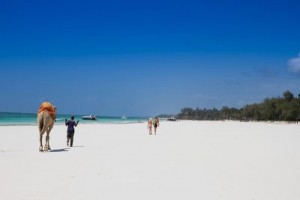
Beach traders


August 16, 2013

Protect the Rhino AND Save Money on Your Safari Too

Filed under: African Safari,South Africa — Tags: , , , , , , , , — Tracey Campbell @ 10:00 am

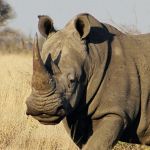
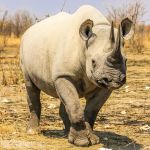
As we all know, rhino poaching in South Africa has been constantly hitting the news for the past few years, with the current figures showing that over 500 rhinos so far this year alone have been killed unnecessarily for their horns across the country. Although there is no scientific proof of its medical value, rhino horn is highly prized in traditional Asian medicine, where it is ground into a fine powder or manufactured into tablets as a treatment for a variety of illnesses such as nosebleeds, strokes, convulsions, and fevers.

Awareness is key to stopping this barbaric and illegal trade, and unless it is clamped down, the rhino will soon be joining the ever-growing list of wildlife whose future is looking distinctly dodgy.

The Shamwari Group are actively supporting the Wilderness Foundation ‘Forever Wild’ campaign, one of the ever-increasing number of initiatives to help save rhinos throughout South Africa.

So how can going on safari help?

Well, for every guest who books a safari with Travel Butlers at one of the lodges within the Shamwari Group portfolio on the specially discounted Forever Wild/Protect and Save Package rates, Travel Butlers will donate between ZAR 100 and ZAR 450 per guest per night (depending on the lodge booked) towards the ‘Forever Wild’ campaign. In addition, the Shamwari Group will then also donate a further sum to the campaign.

Shamwari are proud to have raised ZAR 2,000,000 for the campaign in total, and Travel Butlers have actively contributed towards on behalf of our clients.

The initiative is continuing until the end of December 2014, so there is still plenty of time to book a safari and help save the rhino.

The Shamwari Group consists of 6 lodges in the malaria-free Shamwari Game Reserve near Port Elizabeth, plus Jock Safari Lodge and Fitzpatricks at Jock, both situated in a private concession within the world famous Kruger National Park, and finally 3 lodges at Sanbona Wildlife Reserve in the Klein Karoo near Montagu.

016_16    tww_black_rhino_b

August 14, 2013

Devil’s Pool – so not for the faint-hearted!

Filed under: African Safari,Botswana,South Africa,Victoria Falls,Zambia — Tags: , , , , , , , , , , , , — Tracey Campbell @ 3:17 pm

Hot off the press – the Devil’s Pool at Livingstone Island, Victoria Falls will be ‘open for business’ from Friday 16th August.

The ultimate infinity pool, the Devil’s Pool is a natural pool formation that teeters right on the very edge of the Victoria Falls.  Just a small submerged rock wall below the water surface acts as a barrier to prevent anyone from hurtling down the 100m sheer drop of cascading water into the gorge below.

Thrill seekers head here every year when the pool is open to see how close they can get to the edge.  The cautious ones sit a few feet away, proud that they have joined the elite few who have the nerve to come here.  The true adrenelin seekers throw caution to the wind, and literally hang as far as they can over the edge.

You are only allowed to visit Devil’s Pool when the river flow is at its lowest and safest levels – so between now and December time. Otherwise, nothing short of a miracle would stop you getting carried over the edge when the water is at its highest!   Tongabezi Lodge, in Zambia, who own and run Livingstone Island where the Pool is situated, operate 5 tours a day over this time, with a maximum of 12 people per tour.

One of the 7 Wonders of the World, the Victoria Falls are one of Southern Africa’s most popular tourist attractions, and are a UNESCO World Heritage Site.  It is estimated that when the Falls are at their highest water levels, about 9 million litres of water per second pour down the vertical 100m drop.  The noise is deafening, and both this and the resulting spray, which can be seen from up to 30 km away, has given the Falls their local name of Mosi-oa-Tunya – “The smoke that thunders”.

You can choose to view the Falls from either the Zimbabwe or Zambia side, and a 2-3 night stay here is an ideal extension to any holiday in South Africa or Botswana.  From Johannesburg, you can fly to the Falls (either Livingstone on the Zambia side, or Victoria Falls on the Zim side) in just 2 hours, and there are also now direct flights from the Nelspruit Kruger Mpumalanga Airport to Livingstone, making it easy to combine a Kruger safari with the Victoria Falls.

August 6, 2013

Kenya’s Part in the Great Migration has now Begun

Filed under: African Safari,Kenya,Tanzania,Travel News — Tags: , , , , , , , , — Tracey Campbell @ 2:37 pm

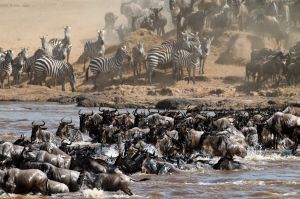
The annual wildebeest Great Migration is well and truly underway now.

The animals began their 1,800 mile round adventure back in January, on the Southern Serengeti Plains, when over half a million calves were born.  The last few months have seen the herds slowly and steadily progress northwards up through the vast Serengeti National Park.

Slightly ahead of previous years, however, the first of the animals have now reached the fresh green grass of the Masai Mara, and guests at the many camps and lodges here have witnessed first-hand the thundering of the hooves of millions of wildebeest and zebra, the snorting noises that carry across the still night air, and the inevitable blood spill, as the tired animals try to cross the Mara River, where crocodiles lie and wait anticipating a quick meal.  Those that do get across safely still have to contend with the lions and hyenas who sit on the sidelines looking for a vunerable animal to bring down for a tasty afternoon snack.

The herds are expected to stay around the Mara for the next few months, so this is an ideal time if you are thinking of travelling over to Kenya for a last-minute safari holiday to see the Great Migration, as some of the camps and lodges do still have limited availability.

Kenya Airways fly direct and overnight between London Heathrow and Nairobi, so you can conceivably leave work on a Friday, and be on your game vehicle on Saturday afternoon at the Mara River, witnessing one of the world’s greatest wildlife events.

If you are looking for some R&R afterwards too, you can add on a few nights at one of the beach resorts along the beautiful Kenya coast, or take a short flight down to Zanzibar, off the mainland coast of Tanzania, and choose from a huge range of  beach hotels at price points to suit every budget.  You could even combine your time on the beach here with a few nights in the bustling and historic Stone Town, and soak up the atmosphere of the winding alley streets and spice bazaars.

Great Migration 1


August 2, 2013

Photographing People

Filed under: Travel News — Tags: , , , , , — Tracey Campbell @ 12:01 pm

When somebody goes on holiday to Africa, no doubt they will come home with a thousand and one pictures of the wildlife they were fortunate enough to see on their safari adventure (take a look at our recent photo competition entries to see some of the latest pictures we have been sent by happy guests). Thank goodness for digital cameras – I remember the first time we went on safari, armed with our trusty Canon SLR and about 30 rolls of film.  It cost us a small fortune to process the pictures when we got home, and I would say at least 80% of the shots were not great – out of focus and blurred, or a lovely shot of the grass, or just showing the tail of the animal as we were just not quick enough with clicking the camera button to capture the moment.  At least now, even on the game vehicle, you can review the shot you have just taken, and if it is not good enough, as long as the ‘subject’ is still posing for you, you can try again!  ~And oh the joy of being able to delete those embarrassing pictures (especially the ones where you get all excited because you think you have spotted an elephant, only to realise you have actually just taken a picture of a solid lump of grey rock in the distance).

But a trip to Africa is not just about the wildlife, it is also about the places and people.

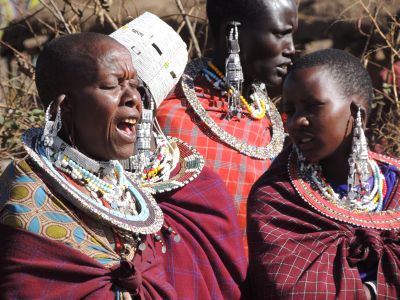
Taking photos of people, however, can be a sensitive issue.  If you are at an ‘organised’ event, such as an evening of Masai dancing, or a visit to a Masai village, then by all means take as many photos as you can and want to – it is all part of the ‘deal’  that you as the visiting tourist have already paid for in the tour/entrance fee.  However, if you are wandering by yourself through a busy street market in Lamu, for example, where normal folk are going about their normal everyday business and shopping for their weekly food, we would always urge people to respect their privacy.  After all, would you be happy if a Japanese tourist followed you around Tesco’s when you are there doing your weekly shop, and blatently takes a photo of you at the check out counter?

Whilst it is of course possible to sneakily take a few covert shots of a street scene (without making it too blatently obvious that is what you are doing), if you do want to take a specific photo of someone close up, please do ask their permission first.  Some people also believe that if you take their photo, you are ‘taking away their soul’ – so snapping someones photo and subsequent soul could cause a bit  of a problem!  If they say no, then you will just have to respect their wishes and walk away.  Be prepared also that if they say yes, however, you may be asked to offer a bit of money to your photographic subject – children in particular are not shy to ask for this!

tanzania 2012 1277

July 31, 2013

Tips for Booking Botswana

Filed under: Botswana — Tags: , , , , , , , , , , , , , — Tracey Campbell @ 1:27 pm

Botswana will surpass your wildest dreams of an authentic African wildlife experience. Rated as one of the best wildlife destinations in the world, Botswana covers an area of almost 600,000 square kilometres – virtually the same size as France or Texas.

If you are planning a holiday to Botswana, although deemed to be an all-year-round safari destination, when you go can affect your safari.  For example, the safari activities in the Okavango Delta are completely affected by the rainfall in Angola – so if your safari dream is to glide through the waterways in a mokoro, make sure you travel to the Delta when the floodplains do have water in them – so between end April and August are the best months.   Also make sure you choose a camp that does offer water-based activities – as some camps, given their location, only offer land-based game drives as they are not near a permanent water supply.

If you are on a budget, there are ways to make your money go further.  Travelling to Botswana during what is known as the Green Season (November to March) means you can take advantage of some of the fantastic low rates that many camps offer.  It is called the Green Season purely because everything is green – the bush is lush and thick, which whilst making a beautiful backdrop to any safari photographs, it does mean spotting the wildlife amongst the foliage is trickier.  Check

Remember that most camps in Botswana are only accessible by light aircraft.  If you believe in packing a different outfit for every day, you may need to rethink your wardrobe needs. as the luggage allowance on most of the flights is strictly 15 kg per person.  Your bag also needs to be soft and pliable as it needs to be squeezed into the small aircraft luggage hold.  So you will definately have to leave the Samsonite case at home for this trip.

If you are looking for a real adventure, check out some of the mobile safari camps.  If camping in the bush in a 2-man dome tent (albeit it with a private bathroom still!), then take a look at the Botswana Adventure package – a 10 night exciting camping trip which ends at Victoria Falls.  Or if you want a little more space and luxury, there are AndBeyond’s Chobe Under Canvas and Savute Under Canvas.  The camps move to a different site every 5-6 days, ensuring that game drives constantly explore fresh areas.

Lastly, if you are a passport holder from the United Kingdom, United States of America, Canada, Australia, New Zealand, Ireland, Belgium, Netherlands, Italy, France, Germany,  Spain or South Africa you do not need a Visa to enter Botswana, so one less thing to worry about or remember to do before you fly!   You will, however, need to take malaria precautions, so do contact your doctor or clinic around 4-8 weeks before your trip to get their advice.

July 29, 2013

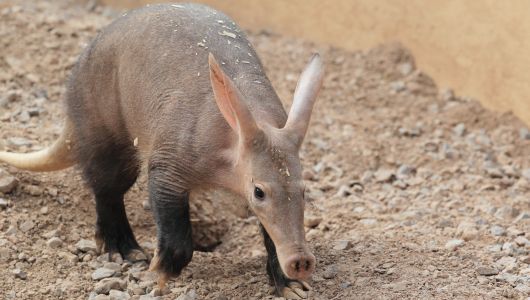
Did you know? A is for Aardvark

Filed under: African Safari — Tags: , , , , , — Tracey Campbell @ 2:42 pm

The aardvark – possibly one of the more elusive animals that you are likely to see on your African safari. If you want to see your ranger/guide grimace or have a look of fear cross his face, make sure you specifically say that seeing an aardvark would really make your safari dreams come true!

Here are 10 interesting facts that you may (or may not) already know about this burrowing, nocturnal animal that is native to Africa.  You never know, one of the facts may even come up in your local pub quiz one night.  Then how clever will you look!

1.  It is the only living species of the order Tubulidentata (a species uniquely identified by their teeth).

2.The name ‘aardvark’ comes from the Afrikaans for ‘earth pig’ or ‘ground pig’, because of its burrowing habits and its vague resemblance to – guess what – a pig.

3. It is also known as the African Antbear.

4. An aardvark’s tongue is up to 30 cm in length.

5. A hungry aardvark can catch as many as 50,000 insects in one night with it’s long, sticky tongue.

6. They live in burrows, and can dig a hole up to 2 feet in 15 seconds.

7. They can live up to 24 years.

8. When threatened by predators, they either dig a defensive burrow very fast fast or they run in a zigzag fashion. to try to elude their hunter.  Failing that, they will roll onto their back and attack with their claws, tails and shoulders.

9. The Egyptian God Set is said (by some) to have the head of an aardvark.

10. Aardvark is the second word in your English dictionary.

aardvark


July 26, 2013

Table Mountain Aerial Cableway Closed for Maintenance

Filed under: South Africa — Tags: , — Paul Campbell @ 11:17 am

The Table Mountain Aerial Cableway is now closed for maintenance until 25 August 2013…so if you want to get to the top of the mountain in the next four weeks you’ll have to walk!

The extended annual maintenance closure is essential to ensure the continued safe and effective use of the iconic attraction. The cableway will reopen on Monday, 26 August 2013, weather permitting.

« Older PostsNewer Posts »