October 22, 2013

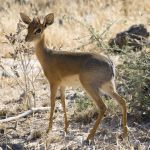
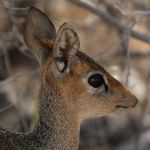
Did You Know? D is for Dik-Dik

Filed under: African Safari — Tags: , , , — Tracey Campbell @ 10:52 am

I am sure all you hardened safari goers knew D was for Dik-Dik. I was sorely tempted to do D is for Dinosaur, but sensibility prevailed at the end of the day, so Dik-Dik it is.

So here goes – 10 useful and interesting facts about this little fellow:

1.  The dik-dik is the smallest antelope found in Africa.

2. They stand a mere 30-40 cm at the shoulder (ahhh, sooo sweet!)

3. Females are larger than the males.

4.  Only the males have horns which are a massive 7.5 cm…

5.  They are called dik-dik after the alarm call made by the females.

6.  They normally live in pairs and will mate for life.

7.  There are 4 species of dik-dik – the Gunther’s dik-dik, the Kirk’s dik-dik; the Silver dik-dik and the Salt’s dik-dik.

8.  Females weigh about 560 to 680 g (1.2–1.4 lb) at birth, while males weigh 725 to 795 g (1.5–1.7 lb).

9.  The survival rate for baby dik-diks is only 50%.

10. They can reach speeds up to 42 km (26 miles) an hour.

150 dreamstimeextralarge_14785586 ETOSHA DIK DIKDamara Dik-Dik (Madoqua damarensis)


October 21, 2013

A Mothers Love

Filed under: African Safari — Tags: , , , , , , — Tracey Campbell @ 11:10 am

I watched Marley and Me last night (again), and unashamedly sobbed my heart out (again). Even my husband had a little tear in his eye.

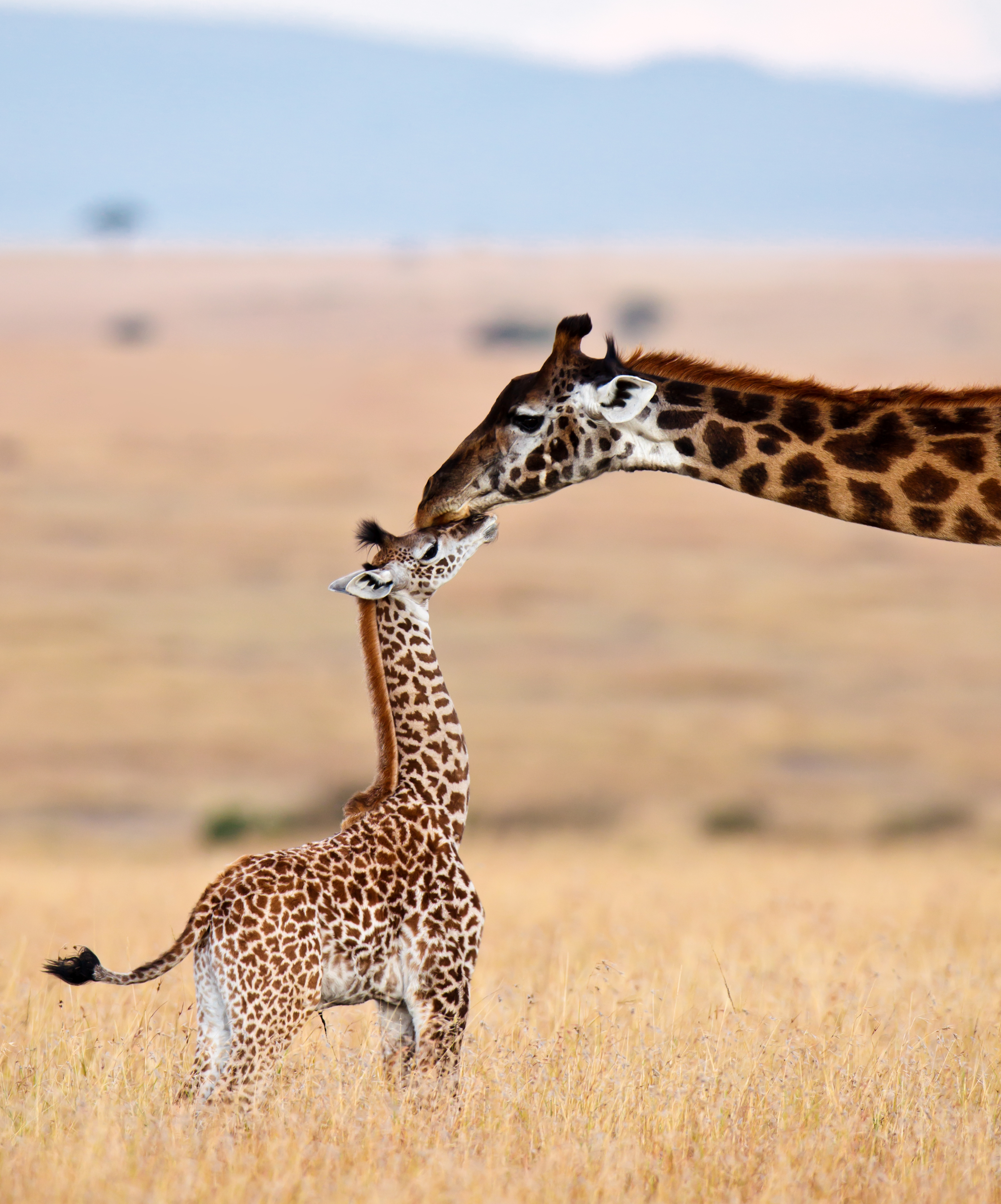
It got me thinking about just how strong the bond is between a pet and their owner, and then that led me onto how strong the bond is between a parent and a child.  Even in the animal world, the bond is strong between a mother and their young.  True, there are some animals who just abandon their young as soon as they are born, but these species are few and far between.

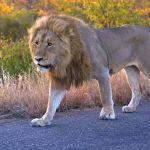
We witnessed a great display of motherly love a few year ago whilst on safari in Sabi Sand, when a pride of 12  lion took down a young buffalo, and the mother came back to defend it.  Single handedly she fought the lions off her baby, and then when the rest of the herd saw that she was putting up such a fight, they all came back too.  12 lion versus 150 buffalo – not surprisingly, the buffalo won the battle, and the lions were chased off into the bush to recover.  And boy, did the 4 of us in our game vehicle cheer and clap when we saw the baby buffalo shakily get up and follow his mother closely as she led him away.  Getting all misty eyed again now just remembering it…

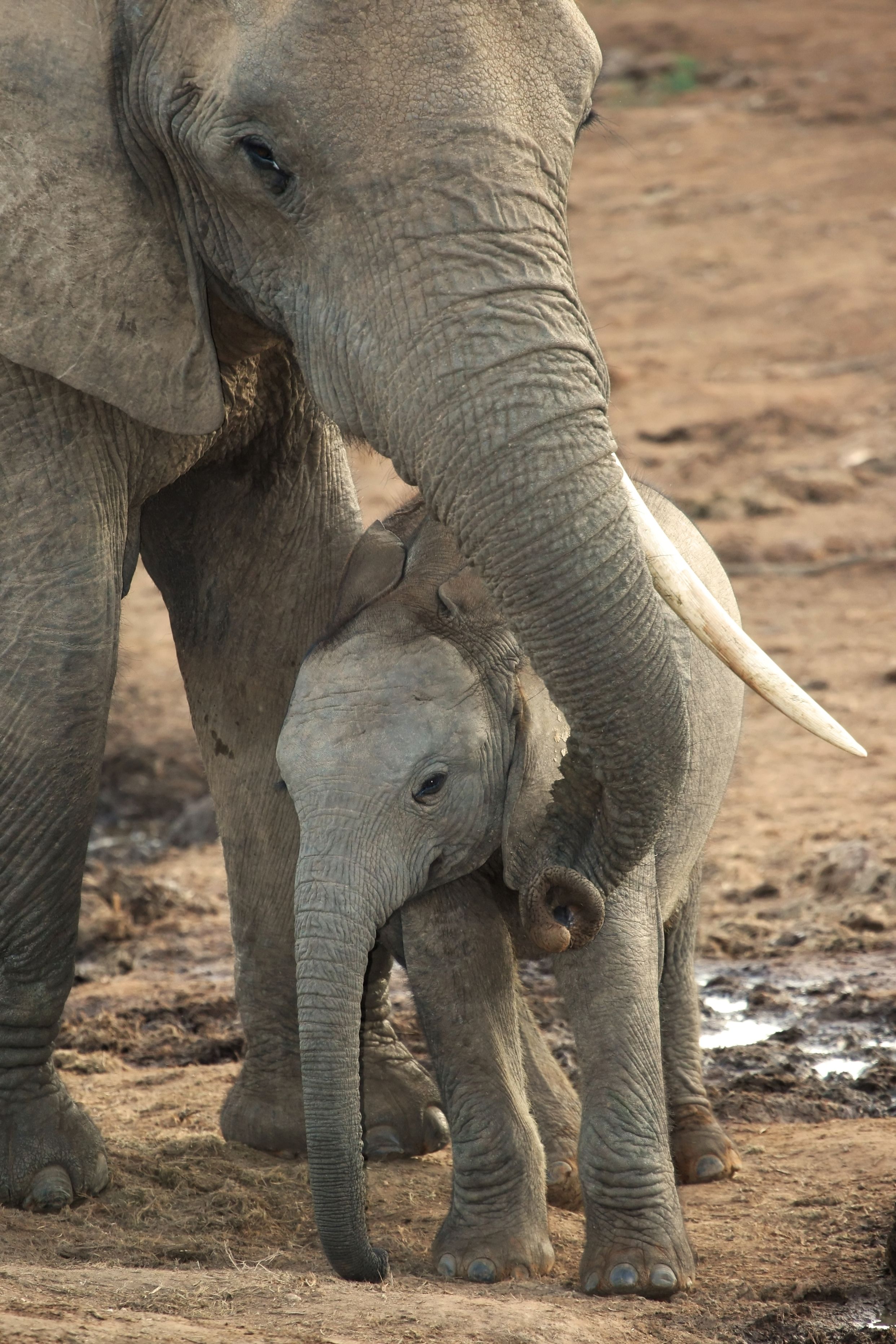
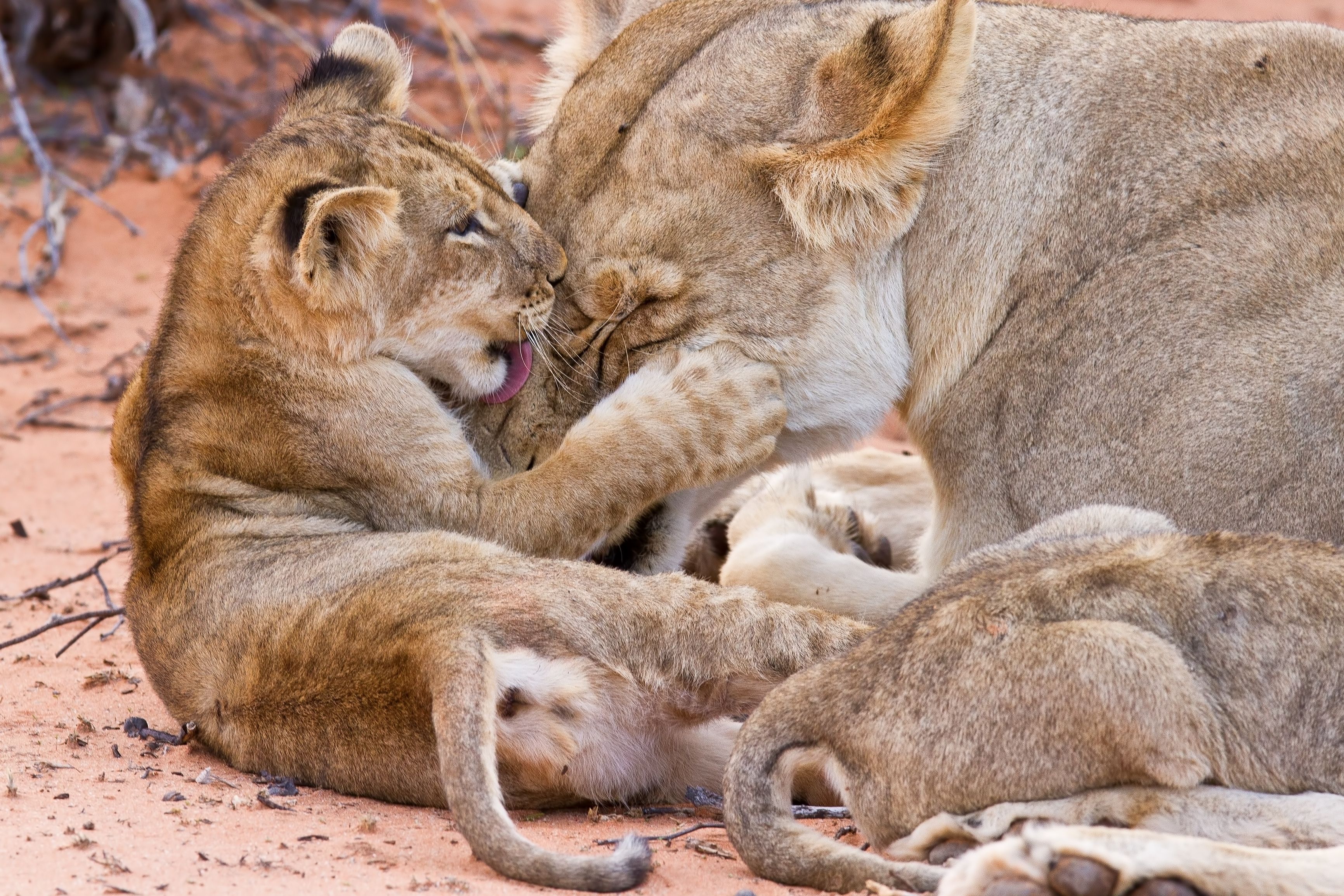
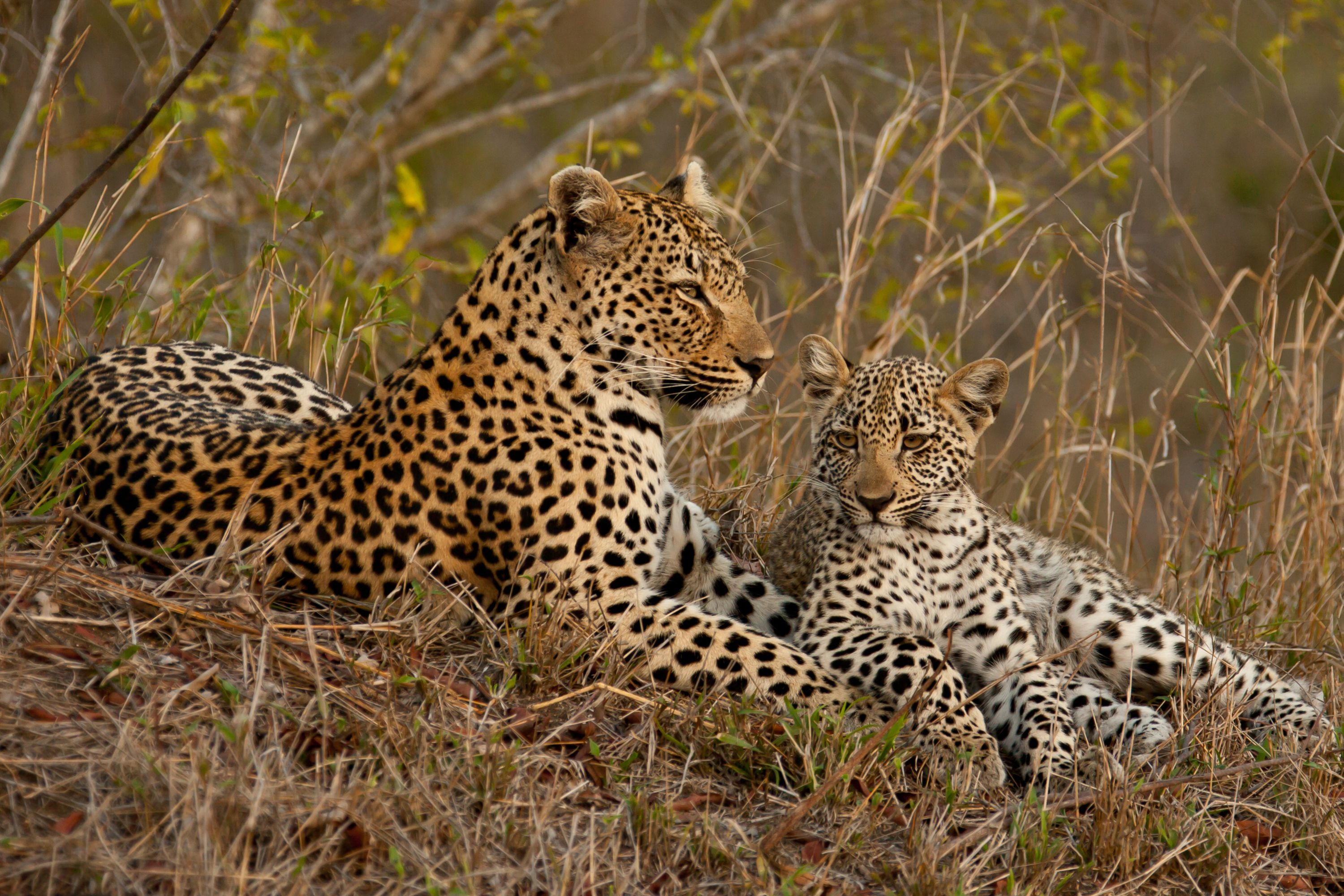
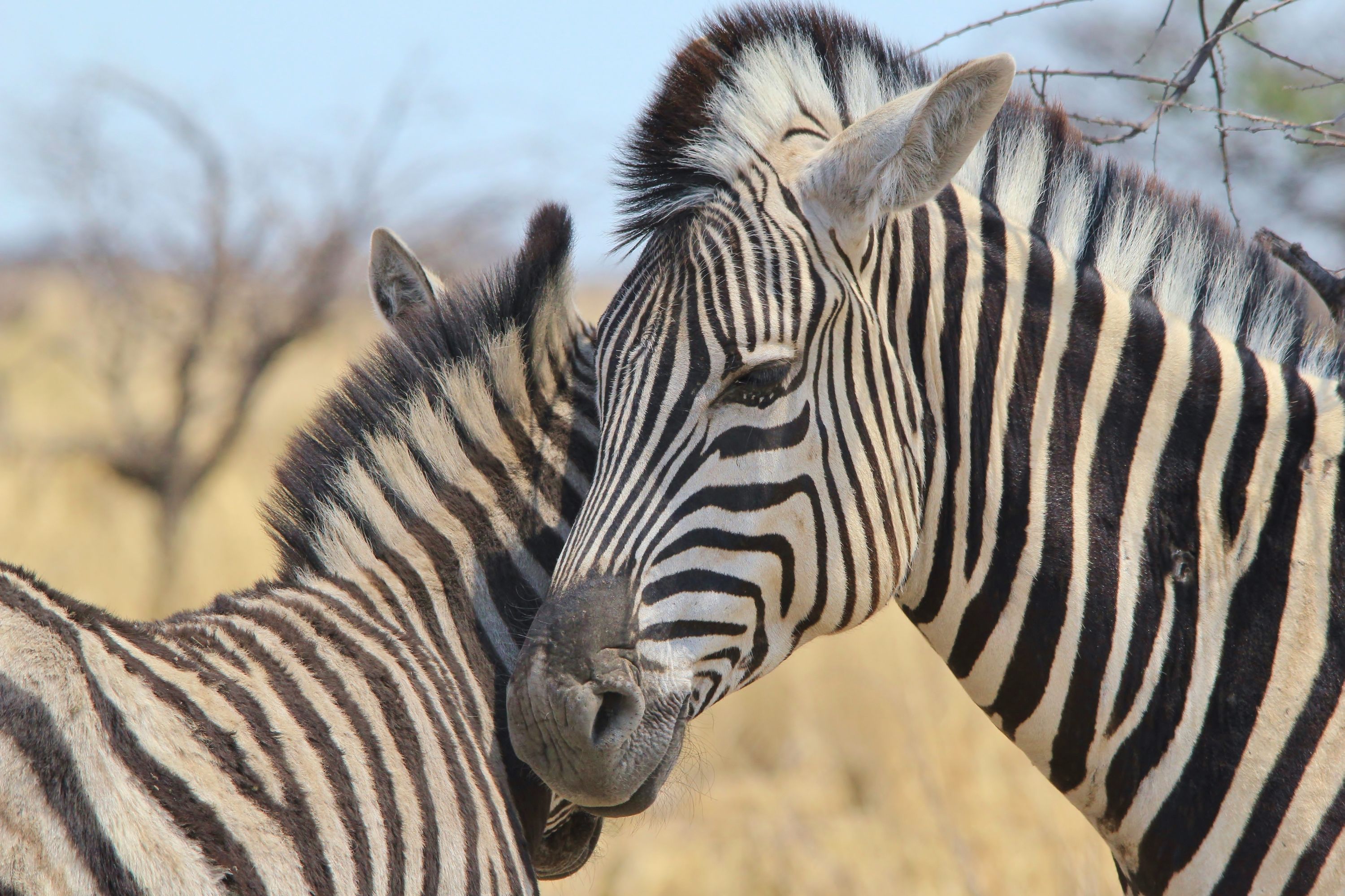
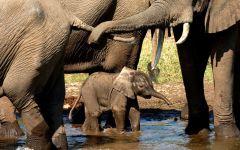
So just to round off this short blog, I did a quick trawl of some of my favourite images of mother/young love.  I hope you like them as much as I do.

dreamstimemaximum_15611225 - masai maradreamstimemaximum_28076999 - MASAI MARABaby African Elephantdreamstime_xl_32683173 generaldreamstimemaximum_17676521 GENERALdreamstimemaximum_33960341 GENERAL

October 18, 2013

Which Camp to Book in Kruger at Easter?

Filed under: South Africa — Tracey Campbell @ 10:00 am

Thoughts are turning to the Easter holidays now, and a recent question on Trip Advisor was about the best camp/area to book in the Kruger Park over this period.

Wishful thinking, to be honest.  As much as I would love to wax lyrical about the best areas and best camps, in all honesty, over the Easter period, whatever you do will be dictated by the availability at the rest camps. Easter is a really popular time, with both locals and international visitors, so our advice to anyone thinking of doing a self-drive safari in the Kruger Park over this period is please – do try to sort something out sooner rather than later!

Skukuza or Satara may be the best camps to start with, as they are the larger rest camps so they basically have more rooms to book out.

Having said that, Berg-en-Dahl normally has availability because it is one of the furthest camps south – I have stayed there, and as long as you don’t expect to see much game in the immediate vacinity of the camp, and you are prepared to drive a few hours to get to the more game-rich areas of the Park around Lower Sabie, Skukuza and northwards, then this is a perfectly feasible place to base yourself if everywhere else is full. Ditto with Pretoriuskop – it also too generally has availability because of its location.

Alternatively, if you cant get any availability in the Park, you could look at staying outside the Park at one of the excellent guest houses in Hazyview – our personal favourites are Rissington Inn or Jackalberry Farm and Lodge.   If you asked them to pack you up a breakfast, you could be at the Phabeni Gate for when it opens or even the Paul Kruger Gate if you were happy with a really early start (in April the gates open at 6 am). Just a thought! You wouldn’t really be missing out on any game viewing time and the room would certainly be ‘nicer’!

October 17, 2013

Frequently Asked Questions – Is It Safe?

Filed under: Cape Town,South Africa — Tags: , , , , , , , , , , , , — Tracey Campbell @ 10:19 am

If I had a pound for every time we were asked this, or indeed for every time this question pops up on the Trip Advisor South Africa forum, I would not be sitting here typing my travel blog, I would have taken early retirement and be living it up on my private island in the Caribbean!

Seriously, however, we do appreciate that safety is everyone’s main concern, wherever you travel to on holiday. Nobody wants to spend their much needed break constantly feeling they have to watch their backs!

We have literally just been asked this question only this morning, by a client who is about to book a 10 night self-drive trip in South Africa, starting in Cape Town and going along the Garden Route, and ending with a safari in the Eastern Cape – which has prompted me to write this quick blog.

The simple answer to the question is yes, it is safe!

This route is probably THE most popular tourist route in South Africa, and we at Travel Butlers literally send hundreds of people along this route every year.  The main road right along the route is the N2, which is a good highway – well maintained, straight and always busy.  I have driven this road and route on my own (as a female) many times, and I have driven it with just my mother, and also with just my husband, and have never had any problems whatsoever.

There are just a few sensible rules to follow when driving in South Africa, which I would say to everyone:

Don’t stop to pick up hitchhikers, however lost and sweet they may look – but then again, I would advise this to anyone driving in the UK, New Zealand or Spain and France too – anywhere actually!

Don’t drive after dark – not because of any hidden dangers lurking in the night, but purely because livestock such as cows are generally not fenced in very well, and there is nothing more scary than bombing along a road and suddenly a cow steps out in front of you.  It may make a bit of a mess of your front bumper…not to mention the rest of your car.

Don’t speed – there are hidden speed cameras plus the police have a sneaky habit of hiding in ditches and pointing speed guns at cars – a speeding fine is an extra cost that you can do without.

And finally, when you get to your destination, always take the advice of your hotel/guest house hosts about where to go in the evenings, and whether you should take a taxi to the restaurant or whether it is OK to walk – and if they say take a taxi, ask them to book the taxi for you there and back, as they will know the reliable taxi people to use.


October 16, 2013

Fenced or Not Fenced – that is the question

Filed under: African Safari,South Africa — Tags: , , , , , , , , , , — Tracey Campbell @ 1:58 pm

A very common phrase that you will see when you are searching for your South African safari is the term ‘fenced reserve’.

But what exactly does this mean? For those not in the travel industry, it may seem like an extra word that has just been added to the description of the reserve, to fill out the page.  Surely everywhere has to have a fence somewhere?

Technically, yes, in South Africa every game reserve or National Park does have a fence, even Kruger and it’s neighbouring private reserves.  Somewhere along the border, there will be a fenceline that will act as a deterent to the wildlife, to stop them leaving the safe sanctuary of the reserve/Park and wandering off to visit local villages.

However, in Kruger, you are talking of an area that covers over 2 million hectares (for those reading this in the UK that is about the size of Wales (minus the sheep); for those in the States this is somewhere between the size of Conneticut and New Jersey; and for those in the rest of Europe, it is about the size of Slovenia).  So the chances of spending your entire game drive looking at a fence is fairly low, as with so much land to cover why would you?

Fenced reserves is a term therefore that is used for smaller reserves, and that is where it does actually have some significance.

For example, in the Eastern Cape, all the reserves are fenced, and in the Kruger area, you have a couple of fenced reserves, such as Kapama and Thornybush.  This is because these reserves are all independently owned, so therefore the owners have to firstly differentiate their land from their neighbours, but more importantly, they have to keep their wildlife on their land too!  As a land/reserve owner, you certainly do not want your larger game such as elephant, rhino or lions wandering off to visit another reserve, so that your guests who pay to stay at your reserve don’t get to see them!  How annoying would that be!  Equally, you don’t want your pride of lions deciding to go for a wander through the local village!

Fenced reserves tend to range vastly in size – anything from 1,500 hectares up to 25,000 hectares and upwards.  Obviously, the larger the reserve, the more wildlife the area can sustain, but this will be reflected in the rates charged.

Larger reserves can also play ‘home’ to more predators, as they equally have the space to keep the plains game and buffalo that the predators will naturally hunt for food.  Get the balance between predators and their ‘food’ incorrect and you will have a reserve full of hungry lions and no buffalo!

I have spent many a happy game drive in a fenced reserve, and to be honest, I have had some wonderful game drives and game viewing experiences.  As long as you go to a fenced reserve knowing that you will not see a herd of a million wildebeest wandering across in front of your game vehicle, or expect to see 20 different prides of lions, then there really is no reason not to have a great safari experience in a fenced reserve.
October 7, 2013

Lusaka is still accessible!

Filed under: African Safari,Travel News,Zambia — Tags: , , , , , , , — Tracey Campbell @ 11:54 am

British Airways recently announced that they were stopping their direct London Heathrow to Lusaka, Zambia flight – the last flight departs Heathrow on the 25 October. However, this should not deter people from considering going to Zambia for their safari holiday, as you are missing out on a wonderful wildlife experience.  Not to mention the spectacular scenery, the opportunity to top or tail your trip to Victoria Falls, one of the 7 Wonders of the World, and for the more adventurous, the chance to do a 3-4 night walking safari into the bush, sleeping out under canvas with just the sounds of the wild to lull you to sleep.

You can still fly with BA or South African Airways direct to Johannesburg overnight, and then connect with a morning flight from Johannesburg onto Lusaka with South African Airlines, which is just 2 hours.  Currently, the flight from Johannesburg to Lusaka departs at 1030, and lands at 1230.

Otherwise, you can also consider flying with Emirates via Dubai and then onto Lusaka, or Kenya Airways via Nairobi and onto Lusaka.

KLM also offer a flight schedule via Amsterdam and Harare.


October 3, 2013

Driving In South Africa? These are not the droids you are looking for…

Filed under: South Africa — Paul Campbell @ 11:25 am

Driving in South Africs? These are not the droids you are looking for...

South Africa is a great destination for a fly/drive style holiday: From Cape Town and the Garden Route to driving around the Kruger National Park, the roads are generally in good condition, it is easy to get around, and the scenery can be spectacular.

There are a few things that visitors may find a little different from home. Some of these are unexpected pleasures such as petrol stations where you will have someone re-fuel your car, wash your windscreen and maybe check your oil, wheras others can be frustrating such as road signs that suddenly disappear or places that can be known by two or even three completely different names.

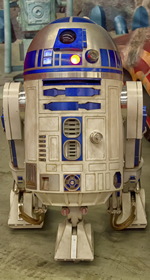
Given the erratic nature of the road signs, it is not uncommon that you may need to ask for directions at a petrol station or in a town, and if this happens you may be surprised to get the response “turn left at the next robot…”. You have not suddenly been transported into a Star Wars film:  a ‘robot’ is the South African term for traffic lights.

I’m sure we were not the first or last visitors to be disappointed that we were not taking directions from R2D2…so these are not the droids you are looking for.

Our extensive guide to driving in south africa will give you a good idea of what to expect if you are visiting on a self-drive holiday, and covers issues such as driving licences, road conditions, what to do if you get stopped for speeding, and some general tips for having a safe and happy holiday.

September 20, 2013

Travel Butlers Win Best Tour Operator At SATOA Awards

Filed under: Travel Butlers,Travel News — Tags: , — Paul Campbell @ 3:44 pm

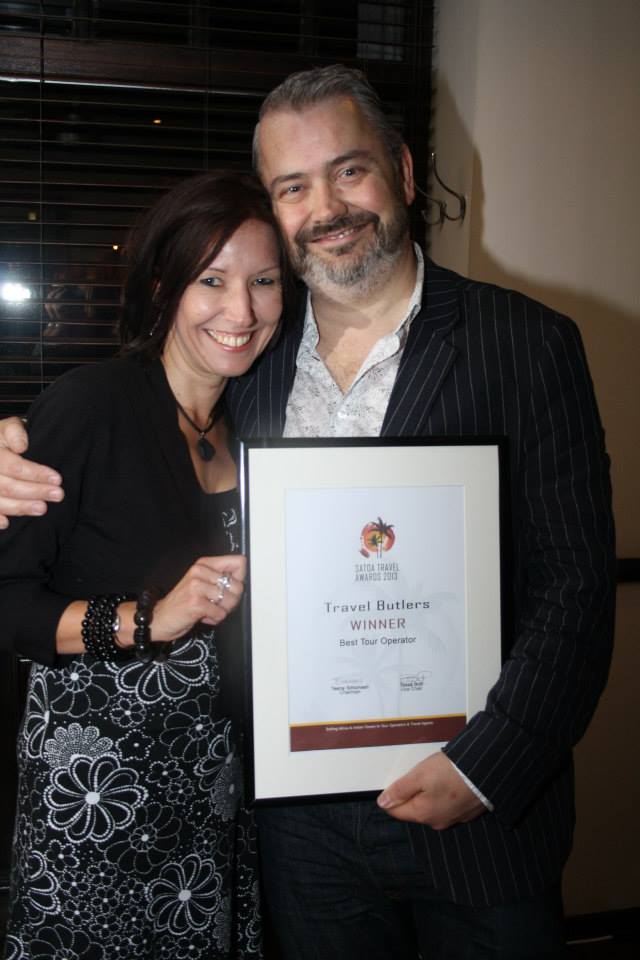
Tracey and Paul Campbell of Travel Butlers at the SATOA Awards.Travel Butlers were delighted to win Best Tour Operator at the 2013 SATOA Travel Awards.

Speaking after last night’s ceremony in central London, Paul Campbell of Travel Butlers said: “This is a really special award for us as it is voted for by the people who matter most to our business:our clients and our friends and colleagues in the travel industry.

“This is the second year running that we have been fortunate enough to win this award, and we would like to thank everyone who has helped us arrange such amazing holidays for our clients, and of course many thanks to everyone who voted for us.”

SATOA-Award-Winner-2013


August 30, 2013

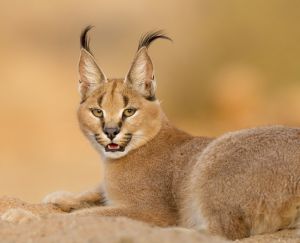
Did You Know? C is for Caracal

Filed under: African Safari — Tags: , , , — Tracey Campbell @ 12:05 pm

Amaze your friends and family with these 10 facts about the Caracal.

1.  The caracal is also known as the desert lynx.

2.  As well as the usual ‘cat-like’ sounds of hissing and purring, they also make a barking sound.

3.  They have long black tufts of hair on the tips of their ears.

4.  Leading on from Fact 3, the name ‘caracal’ comes from the Turkish words ‘kara kulak’ – meaning ‘black ear’.

5.  Whilst they favour small prey such as spring hares, mice and birds, they have been known to take down a springbok or a steenbok.

6.  They can catch birds by leaping 2-3 meters or more into the air from a standing position.

7.  Fur colours varies from reddish-brown to tawny-grey, and occasionally you may find a rare all-black caracal.

8.  Caracals are usually solitary animals.

9.  Females can give birth to as many as 6 young.

10.  Caracals in captivity have been known to live up to 16 years.

caracal

August 27, 2013

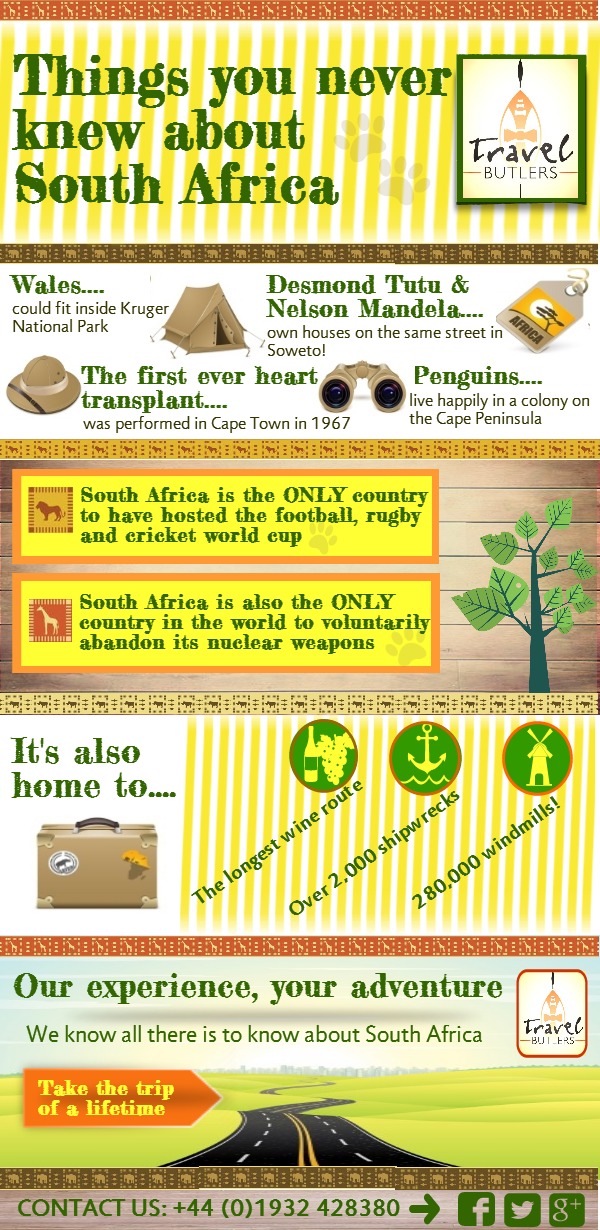
Things you never knew about South Africa

Filed under: Infographics,South Africa — Tags: , — Paul Campbell @ 10:06 am

South Africa is an amazing and diverse country, and is steeped in history and culture. From penguins to windmills to vast national parks, there is so much to treasure about this wonderful country.

Amazing Things That You Never Knew About South Africa

Amazing Things That You Never Knew About South Africa

« Older PostsNewer Posts »