Whale Watching

Whale Watching

Get close up and personal with a Southern Right whale on a boat-based trip from Hermanus or Gansbaai.

Whale Watching

One of the highlights of the Western Cape

Whale watching is one of the major attractions of the Western Cape.  The peak time, when daily sightings are virtually guaranteed, is during September and October.

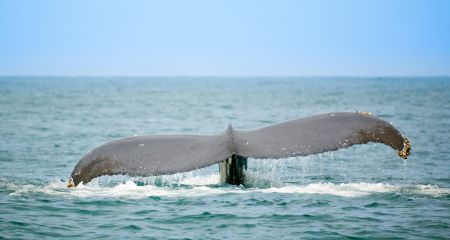
Whale tailHumpbacks and Bryde's whales are mostly spotted offshore from boats, but by far the most commonly sighted species, either from land or from a boat, is the Southern Right whale.

These majestic giants migrate to the South African waters from the Antarctic Ocean to calf from June, and begin the long journey back again at the end of November or beginning of December.  

On the Western Cape, Hermanus and Gansbaai are the 2 main areas for whale watching, either boat-based or land-based.  Plettenberg Bay, along the Garden Route, is also a hot-spot for whale watching enthusiasts. 

Suggested Itineraries

Prices from GBP £ 1,156 US$ 1,780 ZAR 15,955 EUR 1,364 pp*Whales, Wine and Wildlife
14 day itinerary.
Guide price valid for travel in September 2013

Prices from GBP £ 1,224 US$ 1,885 ZAR 16,895 EUR 1,445 pp*Discover the Romance of the Cape
13 day itinerary.
Guide price valid for travel in September 2013

Prices from GBP £ 1,359 US$ 2,092 ZAR 18,748 EUR 1,603 pp*The Treasures of the Cape
12 day itinerary.
Guide price valid for travel in July 2013

*Prices are per person and are based on today's exchange rates. Exchange rates are subject to change and are updated daily.

Prices exclude international flights - ask us if you would like to include these.


whale watching at hermanus and gansbaai

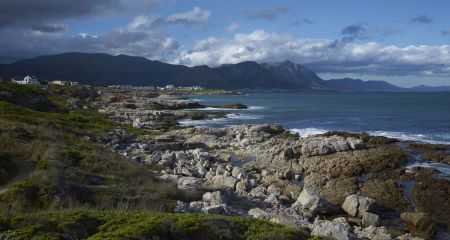
Only 120 km from Cape Town, the pretty little town of Hermanus is one of the world's 12 best whale viewing sites.  It is a popular weekend and holiday destination for South Africans, as well as for overseas visitors.  The local 'Whale Crier' walks the streets during the whaling season, informing visitors when the whales are present with a blast on his kelp horn. At the Old Harbour Museum, an underwater microphone transmits the whale songs and calls into the museum hall for everyone to hear.

Good whale watching vantage points are from the Old Harbour wall, or from the 12 km cliff path. Another great spot to watch the whales is at Bientang's Cave restaurant, where from your table you can watch the whales frolic not more than 100m away in the Old Harbour.

The town also has several fine beaches and restaurants, and a good selection of accommodation establishments if you do not fancy the very early start needed to drive the 90 minutes from Cape Town to get to the early morning whale watching boat on time!

Our recommended operator from Hermanus is Southern Right Charters whose trips go out into Walker Bay.  As well as spotting whales, you may also encounter dolphins, seals, penguins and marine birds. 

Gansbaai (meaning Goose Bay) is a quaint traditional fishing village just 50 km along the coast from Hermanus.  The awesome De Kelders cliffs offer excellent land viewing opportunities along the coast during the whale watching season. 

The boat-based whale watching trips from here, with our recommended operator, Dyer Island Cruises, also visit Dyer Island, which is home to a colony of African or jackass penguins, and Geyser Rock, home to an incredible 50,000 Cape fur seals. But be warned - the seals are great fun to watch - but the smell is not so fantastic.

Some trips also takes in Shark Alley, where Great White sharks can be seen gliding through the water. For a great adrenalin rush, try experiencing the Great White shark close up, from the protection of a solid cage submerged in the water.

whale watching at plettenberg bay

Plettenberg Bay offers all year round whale watching.  Visitors here can often seen whales just a few metres from the shore, or the cliff based whale watching from points along Robberg and Keurboom beaches and Robberg Nature Reserve offer even better viewing opportunities.

Plettenberg can boast all year round sightings of the resident Bryde’s whales.  The Southern Right whales are in the bay from between June and November, and when they leave, migratory humpback whales arrive with their calves early November and stay until the end of February, returning again during May and June.

boat-based whale watching

Coming close up with a Southern Right whale in its natural habitat is an exhilarating experience, and you certainly get a thrill from boat-based whale watching.  Whales are generally friendly, curious creatures, and will often surface 5m from the boat - offering an unforgettable close encounter! 

The boats will not go out in stormy or extremely windy weather, so you must always be prepared for a trip to be cancelled in adverse conditions.  It is advisable to phone up the day before to check with your operator whether the weather conditions are looking favourable.

The best time to go out is early morning, as the winds do pick up during the day, and the afternoon rides tend to be much more choppy and rough. 

It is extremely important that you check with your operator the time you should meet, and make sure you are there in time - the boats have to go out at certain tide levels, and quite simply if you miss the tide, then you don't go out.

What to Bring

The sea can be choppy, and if you suffer from sea-sickness, it is certainly advisable to take some tablets before you set off on your boat adventure.

Most operators will give you waterproofs to wear, but it is always worth checking with your operator first as you don't want to run the risk of being soaked with spray when the boat bounces through a particularly rough wave.

If you have expensive camera equipment, it may also be worth investing in a plastic covering - or even bring along a home-made one!  However, unless you have an extremely steady hand, don't expect to take an award winning photo, as you may be spending most of your time bracing yourself against the movement of the boat.  Instead of hiding behind your camera lens, just enjoy being this close to one of natures gentlest giants, and marvelling at its gracefulness.

Who to Go With

Boat-based whale watching has, not surprisingly, become extremely popular, and it has become necessary over the past few years to limit the 'tourist intrusion' to avoid undue stress for the whales. 

Only operators holding a registered permit are allowed to approach and remain within 50m of a whale.  There are only a limited number of permits granted every whaling season throughout the whole of South Africa, and the selected operators that Travel Butlers recommend are all permit holders.  The operators who do not hold a permit are only allowed within 300m of a whale.  However, should the whale decide to approach the boat, it then really doesn't matter whether you have a permit or not!

watching the whales from the land

If your sea-legs really aren't that strong, then watching whales from the shoreline or from the cliff tops is still a fantastic experience.  There are plenty of excellent viewpoints along the recognised whale watching routes, and your guest house or the local Tourist Information Office will be able to advise on the best places to go.

The whales often come extremely close to the shoreline - within one kilometre - so binoculars are not always necessary, though they are a useful thing to have with you so you can get a closer look.

The other advantage is that you will be able to take better pictures, as you will be more steady!

Many of the whale watching routes have interpretative signboards along the way, with useful information about the whales.

about the southern right whale

The Southern Right whale migrates from the Antarctic Ocean to the waters off the south coast annually in June - a journey of over 10,000 kilometres - and returns again in December.  They migrate during these Winter and Spring months to mate, calve and rear their young.

About 18m in length (60ft), and weighing up to 80 tonnes, their primary diet is plankton which they filter from the water, slowly swimming through drifting shoals with their mouth wide open to catch them.  They have a life expectancy of about 50 years. Their name is derived from its history of being the 'right' whale to hunt and catch, due to it being so rich in oil and extremely slow-moving. There are only about 4,000 - 6,000 Southern Right whales left in the world today.

The Southern Right can be easily identified from other whale species by the fact that it has no dorsal fin on its back and when it breathes out there is a V-shaped cloud above the water - other whales all exhale in a single column.  Each Southern Right whale also has a unique pattern of characteristic pale callosities (outgrowths of tough skin) on their heads - making it possible to actually identify one from the other!  Similarly, certain white markings on their bellies or tails are also distinct enough for the animal to be identified by.

Southern Right whales love playing around, and according to whale experts, they enjoy watching us as much as we enjoy watching them! Things to look out for when watching Southern Right whales are: 

Blowing: A hollow, echoey sound made when expelling air through the blowhole when breathing normally. This is accompanied by a spout of condensed water vapour. 

Breaching: Breaching is when they lift their bodies out of the water in a massive, graceful leap, and is one of the most spectacular whale habits to witness. Whales will normally breach 3-5 times in succession, and can lift three quarters of their body out of the water in one leap, falling back into the water with an almighty splash.  This is believed to be a way of communication, exercise or possibly to scratch the parasites off that live on their bodies.

Lobtailing: Slapping their tails on the surface is known as lob tailing, and is thought to be a form of communication or a warning message to sharks and other whales.

Spy hopping: The head and body are lifted vertically, as far as the flippers, above the surface. This enables them to see what is happening around them above water.


Hermanus Beach Villa

Guest House / B&B

The stunning Hermanus Beach Villa is conveniently situated on the famous Blue Flag Voelklip (bird rock) Beach, and you are only a few barefoot steps across the lovely white sand away from the Atlantic ocean.There are 4 suites, 3 of which have sweeping views of the ocean, and from May to November it is possible to watch and listen to the Southern Right Whales blow and breach, either from the comfort of your bed, or from the large main lounge while enjoying a hearty breakfast.


Mosaic Farm

Guest House / B&B

Lagoon Lodge provides ultimate privacy and service for only 10 guests. Each chalet has luxurious beds under netting, a large romantic tub, private outdoor shower and a wooden deck with exquisite mountain and lagoon views.


Hermanus Lodge on the Green

Guest House / B&B

Guest Rating: 4.5

Hermanus Lodge on the Green is an exclusive upmarket guest house, offering a great escape and a chance to relax in beautiful surroundings. The 25th green of the Hermanus Golf Course forms part of the front lawn, and a pathway from the back garden leads you into the Fernkloof Nature Reserve.


Abalone Guest Lodge

Guest House / B&B

Guest Rating: 4.7

Abalone Guest Lodge is an unusually artistic and unique guesthouse situated midway between the town centre and the beautiful white beaches of Hermanus. Each en-suite bedroom is individually appointed with original South African art and decor, and has a TV, telephone, and tea/coffee making facilities.


Saxon Lodge

Lodge / Inn

Saxon Lodge offers exclusivity to residing guests in individually designed, private suites (choice of suites, to suit individual requirements). The restaurant is renowned for excellent cuisine and the well stocked resident's pub, with a yachting theme is a winner with guests!Overlooking a traditional fishing harbour with stunning views across Walker Bay to Hermanus and the Cape Point just 2 hours from Cape Town, Saxon Lodge is a perfect location for relaxation and exploring the Overberg region.