
Things to See and Do In and Around Cape Town

Things to See and Do In and Around Cape Town

Whether you want to relax on a beach, swim with a penguin, visit a township or see the city from an open top bus - whatever you decide, there is certainly plenty to do in the Mother City!

Things to See and Do In and Around Cape Town

Beaches, Historical Museums, Township Tours and Robben Island...and More

There are so many things to see and do in and around Cape Town, you can easily fill up any number of days here.  From former prisons to historical buildings, and whale watching to swimming with penguins, Cape Town offers something for everyone.

beaches

Whether you want to just sit and relax, sunbathe, build sandcastles with the kids, people watch, enjoy a romantic sunset, or jump about in the waves attached to a kitesurf, you can do it all from one of the beaches around Cape Town. Being the Atlantic Ocean, the sea has a certain 'chill' factor to it, even in the hot summer months - so don't be fooled by the cobalt blue colour into thinking it is going to be like diving into the Mediterranean - you'll have a bit of a shock!  In some places the current is also very strong, so swimming is not always advised.

The beaches listed below certainly have their own unique 'personalities', so it is up to you to choose which one suits you best, or matches your current mood.

Camps Bay

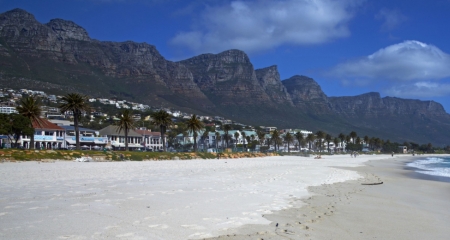
The fashionable and extremely popular beach area of Camps Bay is only a short drive from the city centre. Nestled under the Twelve Apostles, it is a long expanse of white sand bordered by lawns, and on warm, sunny days it is absolutely full of sun worshippers, families, volley ball competitions and cold drink vendors.

However, be warned - the beach is not particularly sheltered, so on a windy day you can get a bit sandblasted! If the wind gets too much, there are superb seafood restaurants and bars all along the front to escape into.

Clifton

Clifton is the place to be seen - an upmarket, trendy destination for tourists and locals alike, with elegant residential homes stretching up the cliff front, some with private cable cars for easy beach access. Its 4 sheltered beaches attract many people in the summer months, and each beach has its own 'following' - First and Second Beach are the places to go if you are looking to show off your body and impress. Try Third if you are looking to impress someone of the same sex, or Fourth if you are feeling more demure (or have your family with you!).

Bloubergstrand

The classic postcard shot of Table Mountain overlooking the bay can be taken from nearby Bloubergstrand Beach, a 48 km stretch of lovely sandy beach lined with sand dunes.  Bloubergstrand is about 25 km north of the city, and is a wonderful place if you want a long, invigorating walk along a beach, without tripping over hoards of sunbathers or sun worshippers.

The beach is often exposed to strong winds, so although not ideal for sunbathing, it is one of the best spots on the Cape for windsurfing or kitesurfing. However, you don't have to get wet to enjoy this sport - just sitting amongst the dunes and watching the experts fling themselves out of the water is entertaining enough. If you want to learn to kitesurf during your stay in Cape Town, there are many operators who can be contacted to teach you!

kirstenbosch botanical gardens

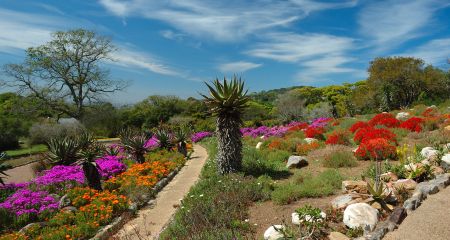
The beautiful Kirstenbosch Botanical Gardens are one of the oldest botanical gardens in South Africa, and also amongst the finest in the world. Set on the eastern slopes of Table Mountain, the 530 hectare estate is a combination of natural forest and the South African speciality - fynbos. 

36 hectares make up the central landscaped garden area, where you can walk, bring a picnic, or sit in one of the cafes or restaurants, and enjoy the peace and beauty of the area.  Outdoor concerts are often held during the summer. 

There are over 6,000 plant species to enjoy, laid out in different gardens, including the Protea Garden showcasing many species of South Africa's national flower. The Medicinal Plants Garden is fascinating, and features many indigenous herbs that the Khoi and San people use in their treatment of various ailments - anything from headaches to pains in your big toe.

There are also several good hiking trails, ranging from 45 minutes to over 5 hours, including the Skeleton Path, which leads right to the top of Table Mountain.  For the blind there is a Braille and Scent trail.

city bus tour

A city tour on an open top bus is a good way to orientate yourself to the City. The buses are known as Topless Buses, and can be caught at the back of the Clock Tower Precinct at the V&A Waterfront. They work on the 'hop-on, hop-off' system, and the tour lasts about 2 hours if you stay on the bus the whole time.

historical buildings and museums

There are many historic buildings and museums well worth a visit in Cape Town, and you can either take a guided tour to see them all, or go yourself.  

South African Museum

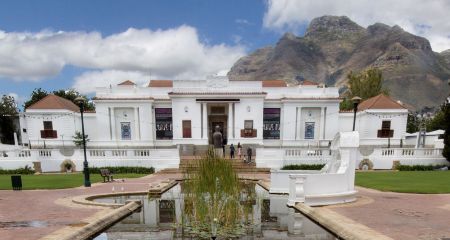
A good place to start is the South African Museum, which dates back to 1825, making it South Africa's oldest museum.  Its main focus is the anthropology of the continent, and includes many interesting exhibits of Southern African early tribal cultures and rock art. Other exhibits include geology and marine life, featuring a 21m skeleton of a Blue Whale.  The adjoining Planetarium gives shows on the Southern Hemisphere night sky. 

District 6 Museum

The sombre District 6 Museum documents the pointless destruction of an area under apartheid in the mid 60s and 70s.  District 6 used to be a vibrant mixed race community, but in 1966 it was declared an all-white zone, and the black and coloured residents were moved out into townships. 

The area was bulldozed to the ground to make way for a new white suburb, but strong opposition resulted in the area being left empty. In February 2004, a programme began to allow previous inhabitants to move back into their home area. 

Today, the museum is a collection of memorabilia and personal photos of the old district and its residents. There is also a floor map where ex-residents have marked where their homes used to be, and a 'name cloth' where written comments try to put into words the traumas of the event.

Castle of Good Hope

The Castle of Good Hope, with its unusual pentagon shape, is one of the oldest European buildings in South Africa, and was constructed between 1666 and 1679.  The original castle was an earth fort, built by Jan van Riebeeck. Today, the Castle is still a military base.  Visitors can wander around on their own, but we would strongly recommend taking a guided tour to get the most out of your visit. The harbour water used to reach right up to the castle walls, but the land was reclaimed, and today the views from the castle battlements now overlook parts of the city centre.

Houses of Parliament

The impressive Parliament Buildings, dating back to 1884, became the seat for the National Parliament in 1910, and have remained that way ever since. During the first half of the year, when Parliament is in session, gallery tickets are available, but overseas tourists need to book in advance. During the Parliamentary recess (July to January), free guided tours of the buildings and art galleries are available.

The City Hall

The ornate City Hall building was completed in 1905, and is made of sandstone, imported all the way from Bath in the UK. Built in Italian Renaissance style, its 39 bells, the largest carillon in Southern Africa, ring out from the 61m high tower on special occasions, giving it the reputation of being a mini replica of London’s Big Ben. The organ, with its 3,165 pipes, is the pride of the Grand Hall, and Sir George Martin, who constructed the organ at St. Paul's Cathedral in London, is responsible for its design. It is from the balcony at the front of City Hall where newly-released political prisoner Nelson Mandela gave his first public address on 11 February 1990, and an estimated 100,000 people gathered outside to witness the event.

The Slave Lodge

The Slave Lodge, previously known as the Cultural History Museum, used to house the slaves who worked in Company's Garden, who were mainly imported from Madagascar, India, Indonesia and other parts of Africa. Between 1679 and 1811, the lodge was 'home', if you can call it that, to over 1,000 slaves, who lived in appalling conditions resulting in up to 20% of them dying each year. Since then, the building has also been used as a library, a Post Office, government offices, and since 1966, a museum.

township tours

Some people have doubts as to whether to go on a township tour, as it seems almost indecent to treat these areas as a 'tourist attraction'.  However, with a good tour operator it is a memorable and enlightening experience.

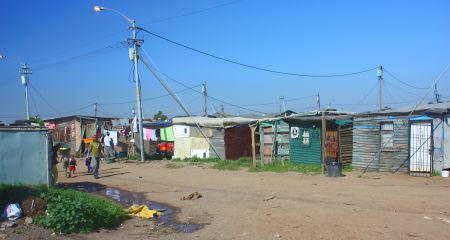
Townships grew very rapidly around every town and city during the apartheid regime, when the black and coloured population were moved out to live in separate areas. Many townships soon became larger than the cities themselves. Today, the majority of Cape Town's inhabitants still live in the townships of the Cape Flats, which are now home to somewhere in the region of 2.5 million people.

A visit to Langa, Mitchell's Plain, Crossroads or one of the other townships gives a deeper understanding of what Cape Town and South Africa are all about and the changes that have happened over the last few decades, and a township tour is certainly one of the more highly recommended tours on offer from Cape Town. 

As with any township in Southern Africa, it is strongly recommended that you ONLY visit these areas as part of a guided tour, which can be booked from the Tourist Information Office at the V&A Waterfront. A tour will generally visit 2 or 3 different areas, to give you a better appreciation of the varying degree of housing conditions in the township - offering a stark contrast to the luxury hotels and guest houses that tourists will return to after their tour. 

Housing conditions range from small, compact and neat bungalows in orderly streets, many of which have Armed Response intruder systems to deter unwanted visitors; to small 2 roomed houses that are shared between 2 or 3 families. At the other extreme are the broken corrugated iron and wooden shacks surrounded by debris, which unfortunately are still home to many families while they await relocation to a new home. Not surprisingly, these shacks do not have running water, but there are central blocks where people can get clean running water from, for washing and cooking, and toilet cubicles.

Many of the infamous 'singles quarters' or hostels, which were built to house the single men who were forced to leave behind their families and move to the cities to find work, have now been converted into family apartments.

The townships are transformed from what they used to be and represent, and now have modern schools, clinics, electricity and clean running water, liveable homes and sports facilities. AIDS clinics, youth centres and counselling programmes have been developed to address the prevailing issue of AIDS and HIV. Community projects encourage local youngsters to express themselves through art and crafts, which are then sold and the money raised ploughed back into the community. There may be an opportunity on your tour to visit such a project, and buy something yourself.

robben island

Robben Island, just off the coast of Cape Town, is a boat ride across the bay from the V&A Waterfront, and is famous for its history as a place of exile, banishment, isolation and imprisonment.

In the 17th century, Jan van Riebeeck confined the first prisoner on the island, and many more followed. Slaves, political and religious Muslim leaders who opposed Dutch colonisation, leprosy suffers, mentally disturbed patients and prisoners of war were all detained indefinitely on the island over the years.

From 1960, the island became known worldwide as the brutal gaol for political prisoners who opposed the apartheid regime in South Africa, many of whom are today prominent members of the present African National Congress government. Two of the most famous prisoners are Nelson Mandela, who was detained on Robben Island from 1964 until 1982, and Robert Sobukwe, the leader of the Pan-Africanist Congress.

With the demise of apartheid, the last prisoners were released from the island in 1991. In 1997, the Robben Island Museum opened to the public, and in 1999, the island was declared a World Heritage Site.

The undisputed 'highlight' of the tour to Robben Island is a visit to the former maximum security prison, including the small cell where Nelson Mandela was held for 18 years.  You may be shocked as your guide explains what the daily routines were, shows you the confined living areas, and describes the punishments administered to prisoners from time to time.  The memory of the island is the future for the new South Africa, and a permanent reminder of the struggle for freedom. The entire visit is unbelievably moving and you will come away feeling privileged to have had a personal insight into the island and its role in history.

Also included is a 45 minute bus tour around the island, which includes a visit to the limestone quarry where prisoners laboured daily, the prison house of Robert Sobukwe, the African penguin colony, and a viewpoint looking across the Bay to Cape Town and Table Mountain.

Especially in the busy holiday periods, advance bookings are advised.

whale watching and shark cage diving

Only 120 km from Cape Town, the pretty little town of Hermanus is one of the world's 12 best whale viewing sites, and during September and October, daily sightings of the Southern Right Whale are almost guaranteed. Good whale watching vantage points are from the Old Harbour wall, or from the 12 km cliff path.  Many boat based trips also go out from Gansbaai, which is just 50 km further along the coast from Hermanus.

For a great adrenalin rush, try experiencing the Great White shark close up with Marine Dynamics.  Come face to face with this ocean predator from within the safety of a sturdy steel cage, which is lowered into the water from the side of the boat.  Your head will never be more than a metre under the surface and you can decide when and how long you want to stay underwater.  Back on board the boat again, the marine biologists and expert crew members will explain everything you want to know about sharks, including how to tell a male shark from a female shark!

the cape peninsula

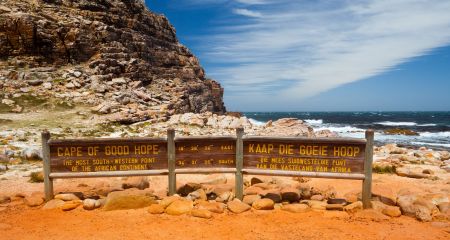
Mistakenly often thought of as the most southernmost tip of Africa, a day trip down to the Cape Peninsula is still a worthwhile addition to any holiday itinerary.  The winding cliff road running alongside the Atlantic coastline, called Chapman's Peak Drive, is a toll road offering breathtaking scenery. 

Boulders Beach, just past Simon's Town, is a rugged coastal area which is home to a large colony of African or jackass penguins.

the cape winelands

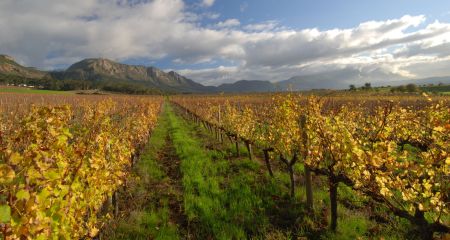
The climate around the Cape is ideal for the cultivation of vines hence the amazing wine that is produced from the region.

The Cape Winelands region is centred around Stellenbosch, Franschhoek, Paarl, Wellington and Constantia, with literally scores of vineyards and wine estates.

Many of the wine estates have wine tastings, cellar tours, and restaurants serving lunches which are open daily to anyone passing by.

activities for kids

Cape Town has a wealth of activites for children as well as adults - so for families travelling to this city, there is plenty to see and do.

The Two Oceans Aquarium on the V&A Waterfront is ideally positioned to showcase the incredible diversity of marine life found in the Indian and Atlantic oceans.  The Aquarium is one of the top tourist attractions in Cape Town and over 3,000 living sea animals, including sharks, fishes, seals, turtles and penguins can be seen in this spectacular underwater nature reserve.  The Aquarium is open every day of the year, and highlights include the kelp forest, diving in the shark tanks, and the 'touch' pool.

The Ratanga Junction Theme Park is only 10 minutes out of the city centre. It has plenty of rides and attractions to keep everyone entertained for the whole day.  With only a one-off entry fee to pay, the rides are then free and you can go as many times as you like.  There are plenty of white-knuckle thrills and spills, as well as tamer attractions for younger children and those who prefer to take their thrills in more manageable doses.