

What to expect from a Safari
For first time safari-goers to Kenya, it is important to understand the difference between staying in one of the National Parks (such as Amboseli) or reserves (such as the Masai Mara) versus staying in one of the many private conservancies which are located just outside the main Park or reserve ‘official’ boundaries.
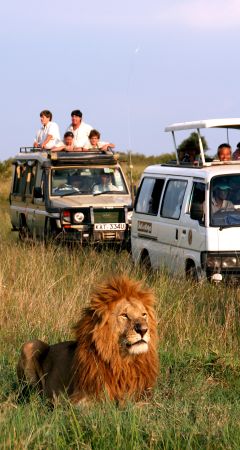 National Parks
The National Parks and reserves are managed by local councils or governments, who are responsible for maintaining roads, controlling poaching, and security within the Parks and reserves themselves.
Typically, the number of visitors is not restricted, and the safari experience is therefore open to everyone. Game drives within the Park and reserve boundaries are restricted only to the extensive road network, and also between set hours – normally 06:30 until 18:30 – meaning no night drives are allowed at all.
You will find that on game drives, you will certainly see other vehicles - whether you are in your own car (which incidentally is not the type of trip recommended by Travel Butlers, as the main highways to get you to your safari destination are either poor quality and/or visitors are faced with extremely long driving distances from the main cities), or in a customised 4x4 safari vehicle or safari minivan, or even if you are part of an organised tour.
Especially in the Masai Mara during the Great Migration months, if you head towards the Mara River to witness the famous wildebeest/crocodile crossings, you could be sharing this experience with up to as many as 50 other vehicles.
Private Conservancy
The other alternative would be to stay at a safari camp situated in a private conservancy, where it is possible to escape the crowds and experience the African wilderness without the presence of other tourist vehicles.
Private conservancies were pioneered back in 1997 by Porini Camps, and their owner/Managing Director Jack Grieves-Cook. The local tribal communities living alongside the National Parks and reserves are encouraged to set aside areas of their land as a wildlife conservancy, which benefits many different parties.
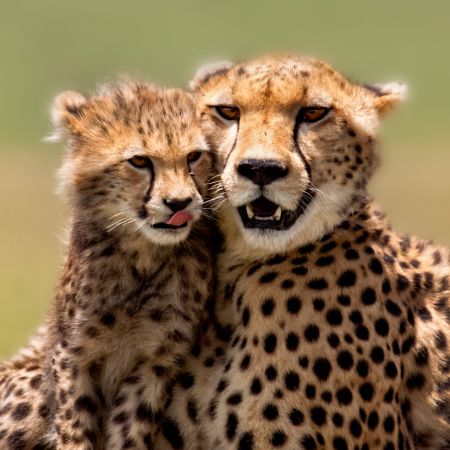 For example, local community members are employed as staff in the camps that are then able to set up in the conservancy; the tribal community earns an income from leasing their land to the conservancy and they also earn a proportion of the tourism income subsequently generated by the camps who supply a high quality safari experience; and the land creates wildlife dispersal areas outside of the Parks and reserves which increases wildlife numbers and species variety, and regenerates vegetation.
There are no physical boundaries between the national reserves and the conservancies so the wildlife is free to roam unhindered.
The safari experience for guests to these conservancies is completely exclusive. Only the game viewing vehicles belonging to the conservancy camps are allowed to drive in the conservancy, so if your morning game drive is on the conservancy, you can be certain that all you will spot will be wildlife!
Also, because you are outside the boundaries of the National Parks and reserves, night drives from the camp after dinner in search of nocturnal animals such as ardvaark, or leopards hunting by moonlight, are a highlight of a stay in one of these camps.
Guided bush walks are also possible - you normally head out early in the morning with a guide, and walk for a few hours before stopping in the bush for a 'bush breakfast'. You are then driven back to the camp.
The camps in the conservancies are still able to take their guests into the neighbouring national reserves, of course, and certainly in the conservancies adjoining the Masai Mara, many of the camps will include a full day game drive into the main Mara Reserve as part of a 3 night package, which is especially popular during the migration period.
With the camps being staffed by the local community, this also gives guests the unique opportunity to interact with staff members and learn about their culture.
YELLOW FEVER
Kenya falls into the Yellow Fever region in Africa. It is imperative for all travellers to obtain a Yellow Fever vaccination no less than 10 days prior to travel.
A valid Yellow Fever certificate is required for all travellers over one year old. Your country of origin and other African countries like South Africa and Tanzania will also deny re-entry without the vaccination, after having visited a country with Yellow Fever.